
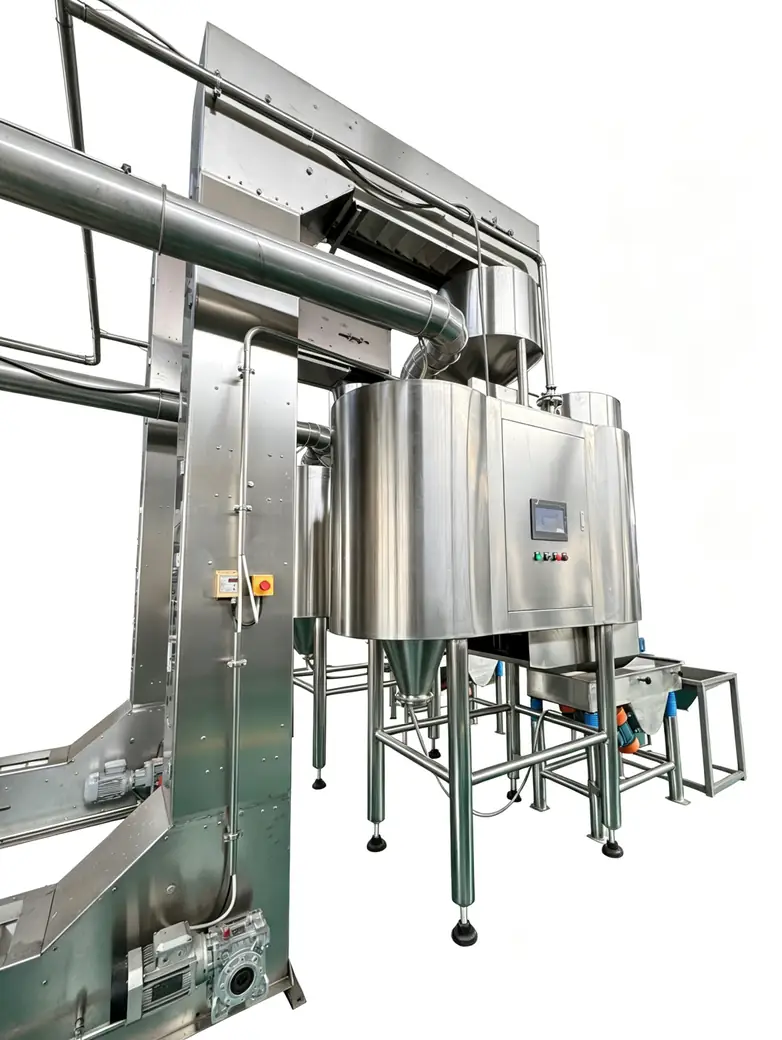
Why the front end decides the product
A colloid mill grinds whatever you feed it. It cannot fix an uneven roast, and it cannot remove skin fragments. Two batches that came off the same mill can look and taste completely different because one was roasted 8 °C hotter in the middle of the bed.
Skin is the other half of the problem. Red skin left in the paste shows up as dark specks, adds bitterness, and raises the peroxide value over time because the skin carries more of the enzymes that drive rancidity. Buyers of light-coloured, sweet-profile butter will reject product on appearance alone.
- Roast evenness controls colour consistency between batches
- Roast depth controls flavour — light for spreads, dark for industrial paste
- Skin removal rate controls colour, bitterness and shelf life
- Splitting into half kernels lets you pull out the germ, which is the most bitter part
The machine sequence that works
For a butter line the sequence is roast first, then blanch. Roasting dries and loosens the skin, which is what makes dry blanching possible without water.
| Step | Machine | What it decides |
|---|---|---|
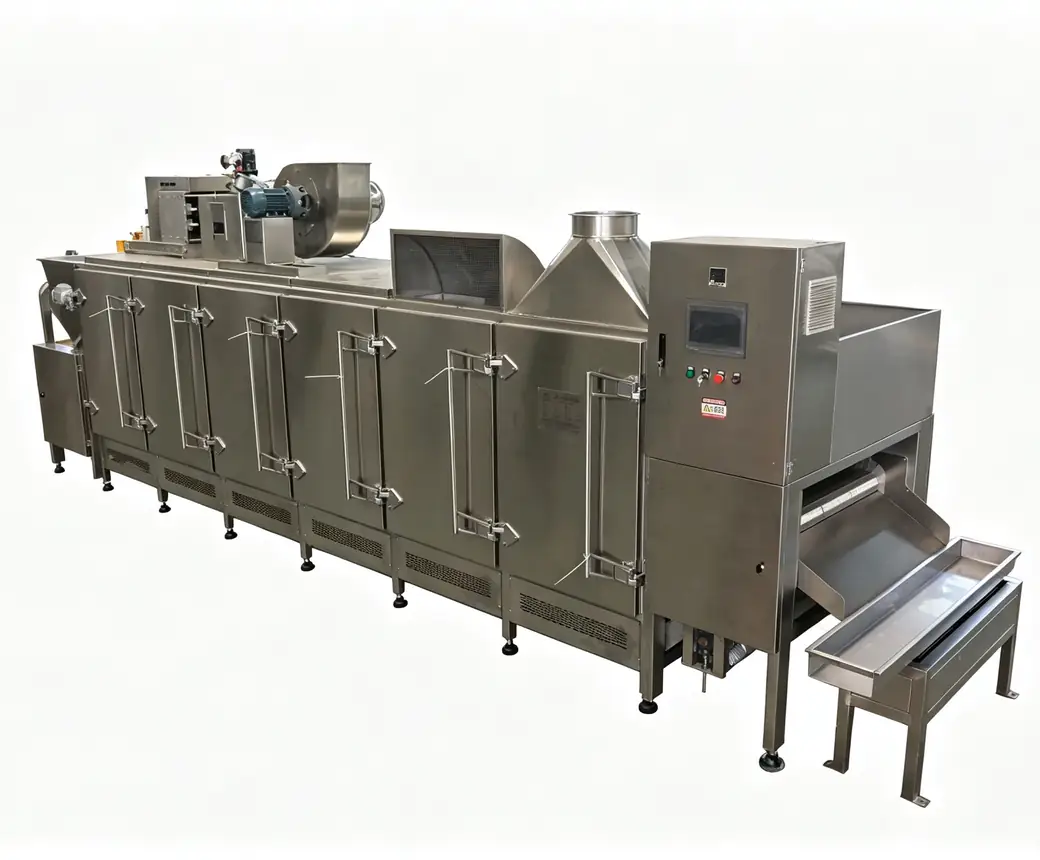
| 1. Roast | Continuous roasting oven DGKX-C | Colour, flavour depth, moisture for the peeler |
| 2. Cool | Cooling zone (integrated in DGKX-C) | Skin must be brittle before rubbing |
| 3. Blanch | Dry blanching peeler | Skin removal rate, breakage rate |
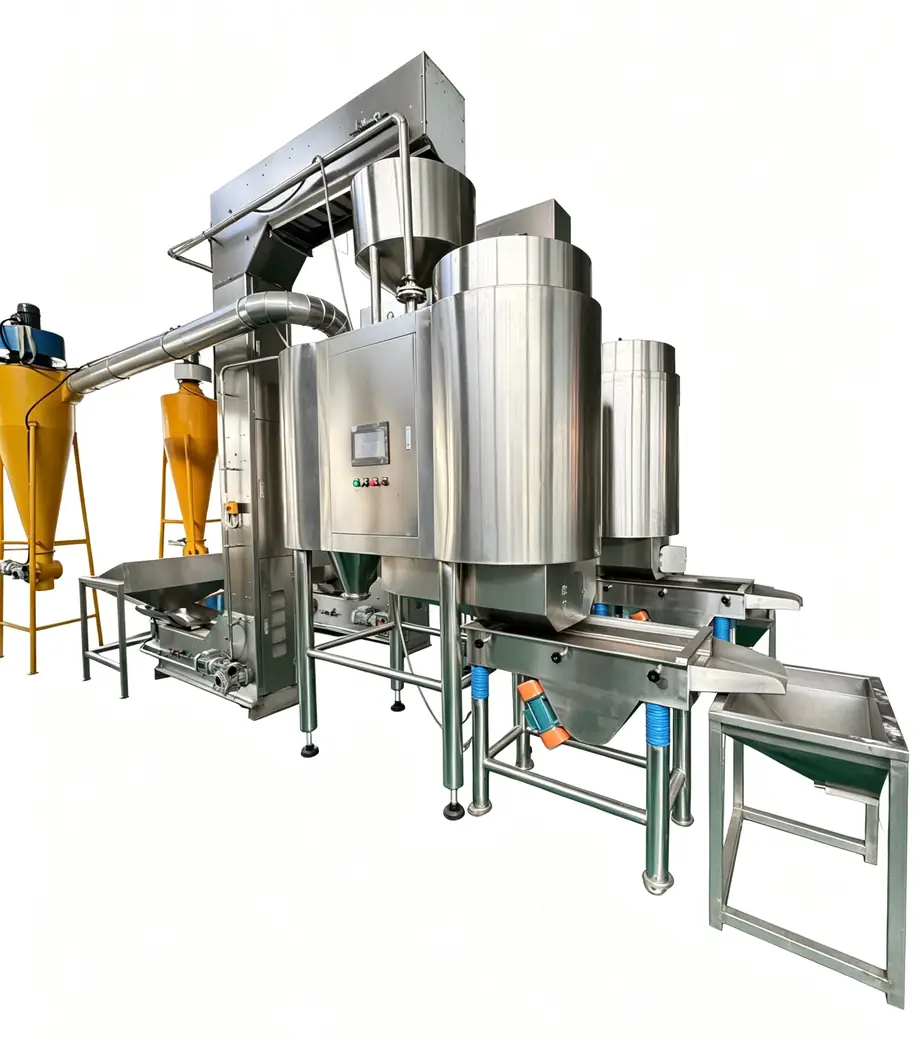
| 4. Split / degerm | Splitting and grading machine | Bitterness control, half-kernel yield |
| 5. Grind | Colloid mill (not supplied by us) | Particle size, texture |
The detail most people get wrong: moisture window
Dry blanching only works inside a narrow moisture window. Too wet and the skin stays elastic and stretches instead of cracking; too dry and the kernel itself becomes brittle and breakage rises.
This is why the DGKX-C runs a low-temperature drying stage before the high-temperature roasting stage — the same machine handles both, and the burner setting is what moves the kernel into the window. If you buy a roaster that can only do one temperature profile, you end up compensating in the peeler and losing yield.
What we need from you to configure it
- Target output in kg/h of finished paste, not of raw peanut
- Whether you want light spread-grade butter or dark industrial paste
- Whether the market accepts skin specks (some ethnic markets prefer them)
- Your gas supply — natural gas, LPG or nothing (the oven is gas-fired on the roast chamber)
- Grid voltage and frequency at the destination