
What makes pulses easier than nuts
- Raw material cost is low, so breakage and yield loss are far less punishing
- The kernels are hard and tolerate handling that would destroy a cashew
- No skin removal step is needed for most products
- The texture consumers want — hard crunch — is easier to hit than the delicate roast of a tree nut
Two product families, two machines
| Product | Core machine | Process note |
|---|---|---|
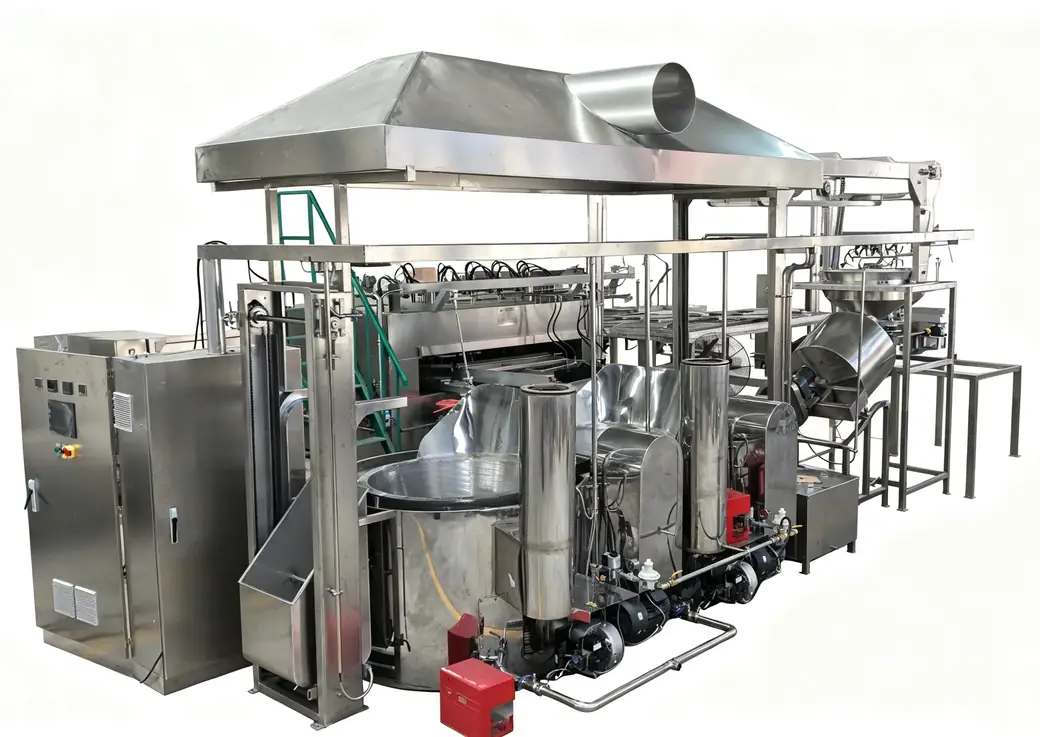
| Fried broad beans, fried green peas | Batch fryer with de-oiling YZJ-R | Basket lifts clear of the oil periodically so every kernel fries evenly, then tips into the de-oiling unit |
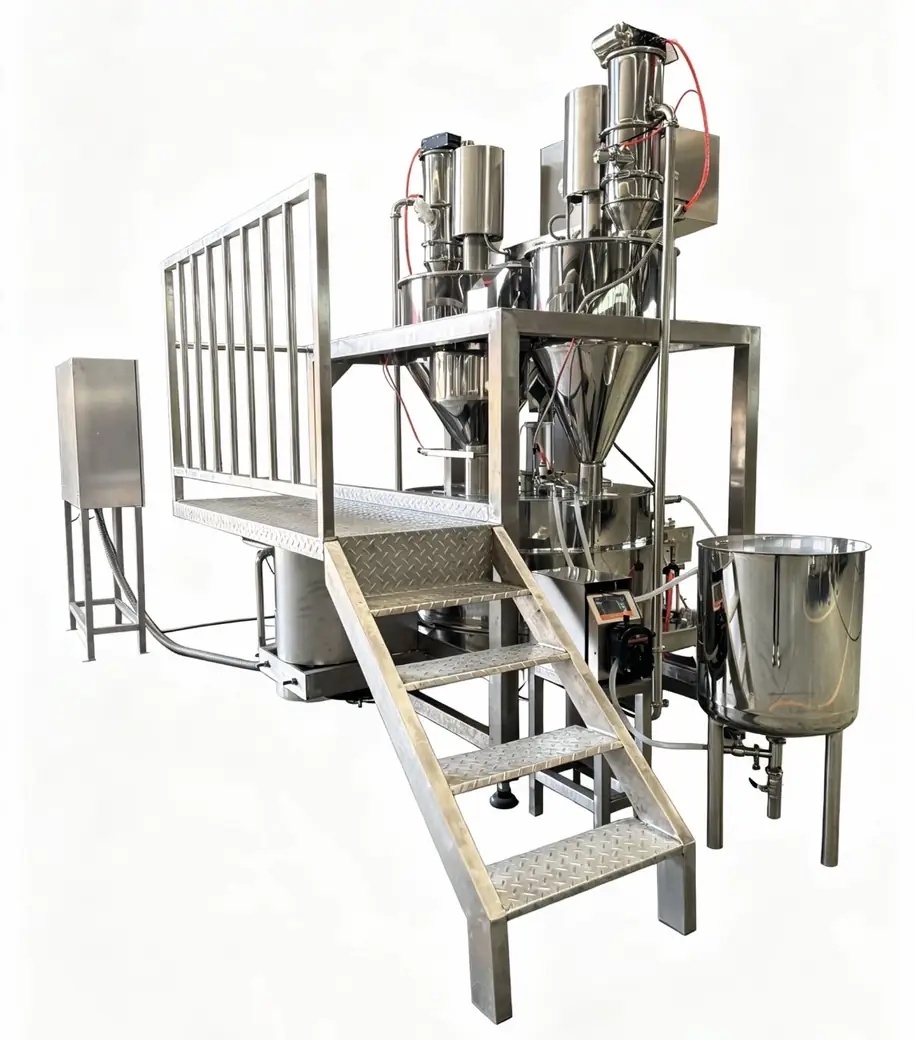
| Coated green peas, wasabi peas | Coating group | Layered starch and seasoning build-up in the coating pan, then dried or fried |
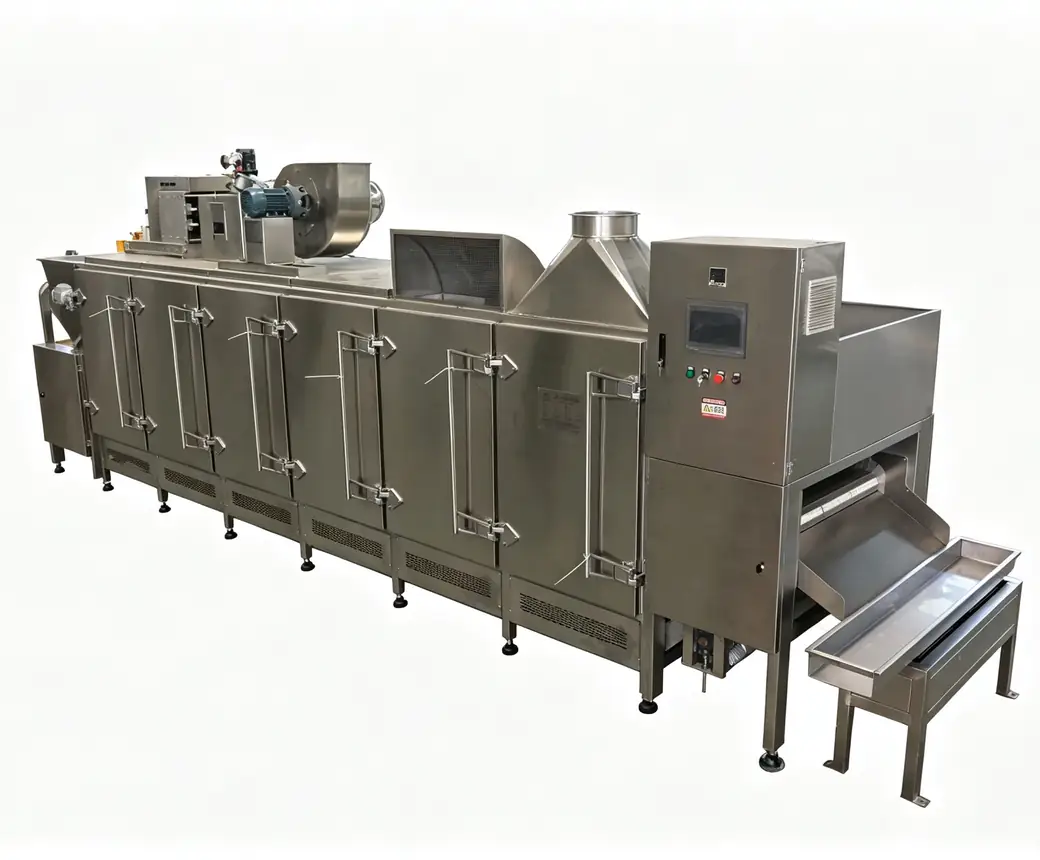
| Roasted chana / dry-roasted chickpea | Continuous roasting oven DGKX-C | No oil, longer roast, moisture driven right down for shelf stability |
Oil cost is the number to watch
On a fried pulse line, oil is a running cost that quietly decides whether the product is profitable. Oil consumption during normal running on the YZJ-R is about 2% of throughput — that is oil absorbed into the product, which is unavoidable.
What is avoidable is oil degradation. The optional filtration circuit cleans the oil while production continues, which raises both oil service life and product consistency. On a line running every day, that circuit usually pays for itself faster than any other option on the quote.
Questions we get asked about this
Do I need to soak the beans first?
For most fried broad bean products yes, soaking and often splitting comes before frying. That part of the process is upstream of our equipment — we start at the fryer. Tell us the state of the material entering the fryer and we will size it correctly.
Can one fryer handle both peanuts and broad beans?
Yes. The YZJ-R takes granular food such as peanut kernels, almonds, broad beans and green peas. Frying time and temperature change per product; the machine does not.