
Three things almonds change
- Higher value per kilo means breakage costs far more. A 3% breakage rate on almonds hurts more than 8% on peanuts.
- Lower starting moisture means the drying stage before blanching is shorter, and over-drying is a real risk.
- Multiple saleable particle sizes — whole, slivered, diced, meal — means the grading section is not an afterthought, it is where the margin is.
Line layout
| Step | Machine | Note |
|---|---|---|
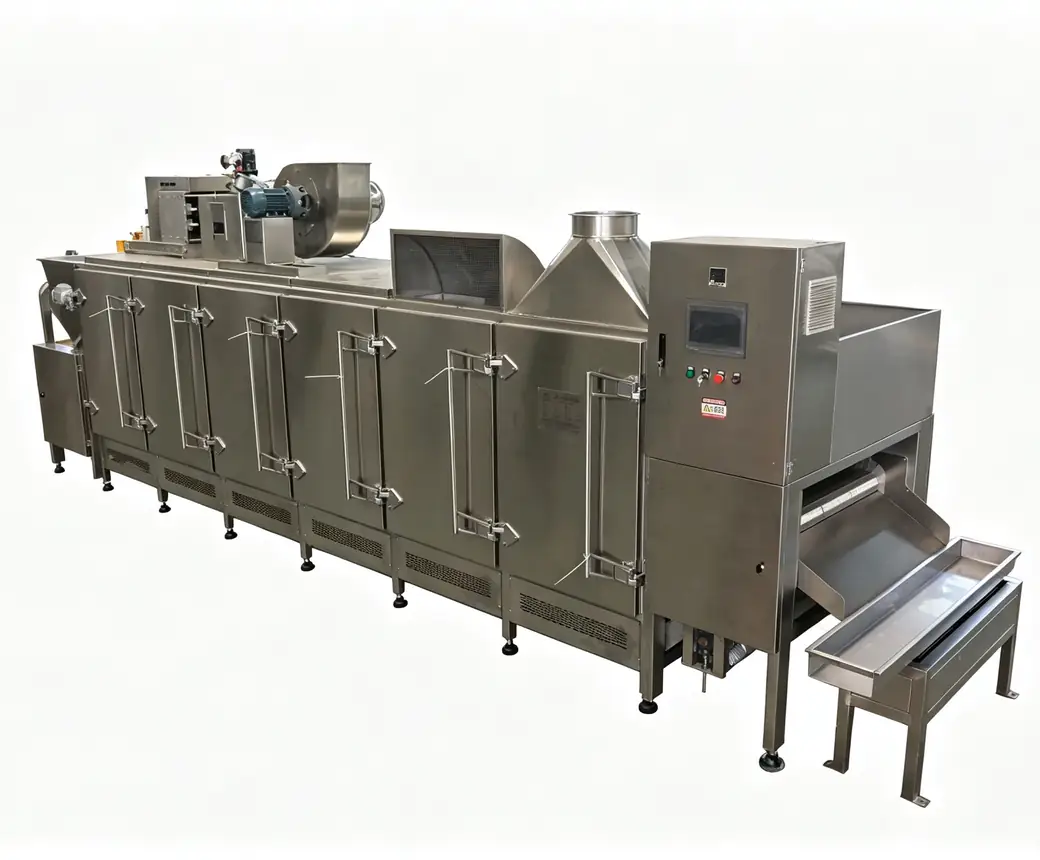
| Drying / roasting | Continuous roasting oven DGKX-C | Low-temp stage for blanching prep, high-temp stage for roasted product |
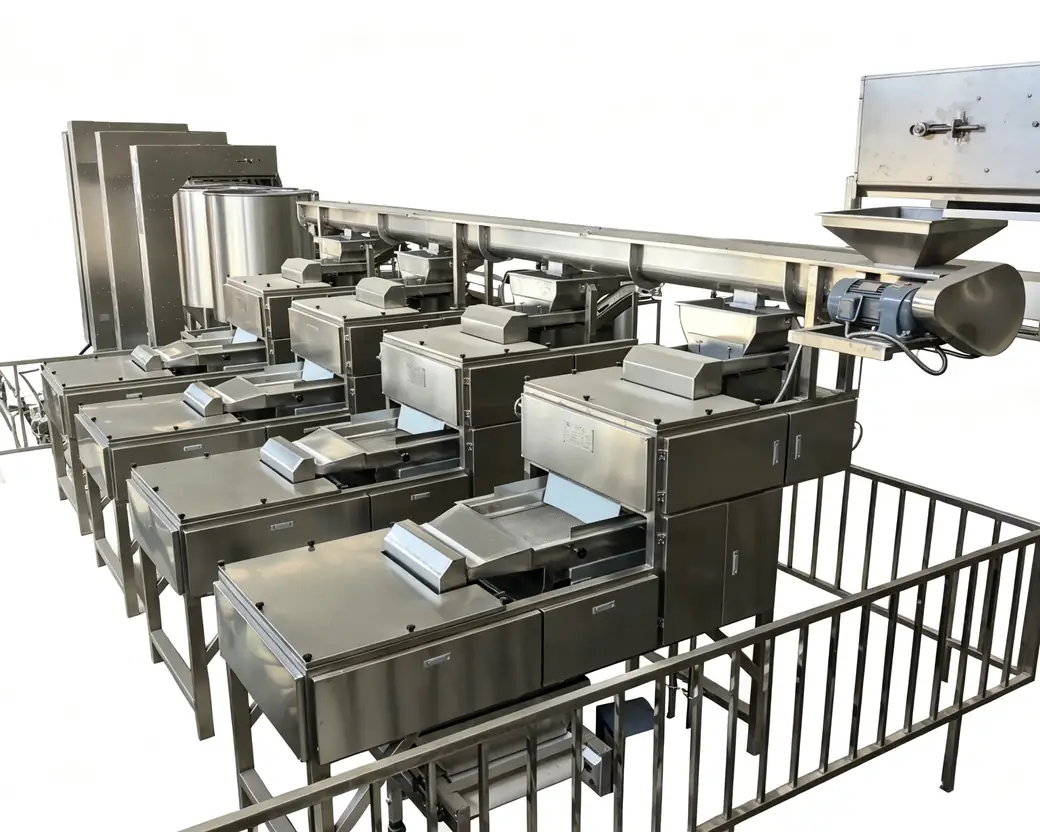
| Blanching | Dry blanching peeler | Roller gap set tighter than for peanut |
| Roasting (batch option) | Rotary pan roaster PDK-90 | For seasoned or flavoured small batches |
| Dicing | Nut dicing and grading machine | Cut size set by knife spacing |
| Grading | Stacked vibrating decks (on the dicer) | Each fraction discharges separately, fines drawn off |
Where the money is: the grading decks
A dicing machine that only cuts is half a machine. What makes an almond line profitable is that the same input becomes several products with different prices — 2–4 mm dice for bakery topping, 1–2 mm for chocolate inclusion, meal and fines for marzipan or flour blends.
Our dicing and grading machine stacks multiple vibrating screen decks after the cutting chamber and discharges each fraction separately, with fines and dust extracted so the graded fractions stay clean. If fines are left mixed into the dice, the whole batch drops to the lowest grade price.
Questions we get asked about this
Can the same line run almonds and peanuts?
Yes, and most of our customers do. Roller gap, airflow and roast curve are adjustable — that is what the settings are for. You will change over in minutes, not rebuild the line. What you cannot do is run both at the same time through one machine.
Do you supply slivering (blade-cut strips) as well as dicing?
Dicing and grading, yes. Slivering uses a different cutting geometry. Tell us at enquiry stage which fractions you actually sell and we will tell you honestly whether our dicer covers it or whether you need a dedicated sliver cutter.