
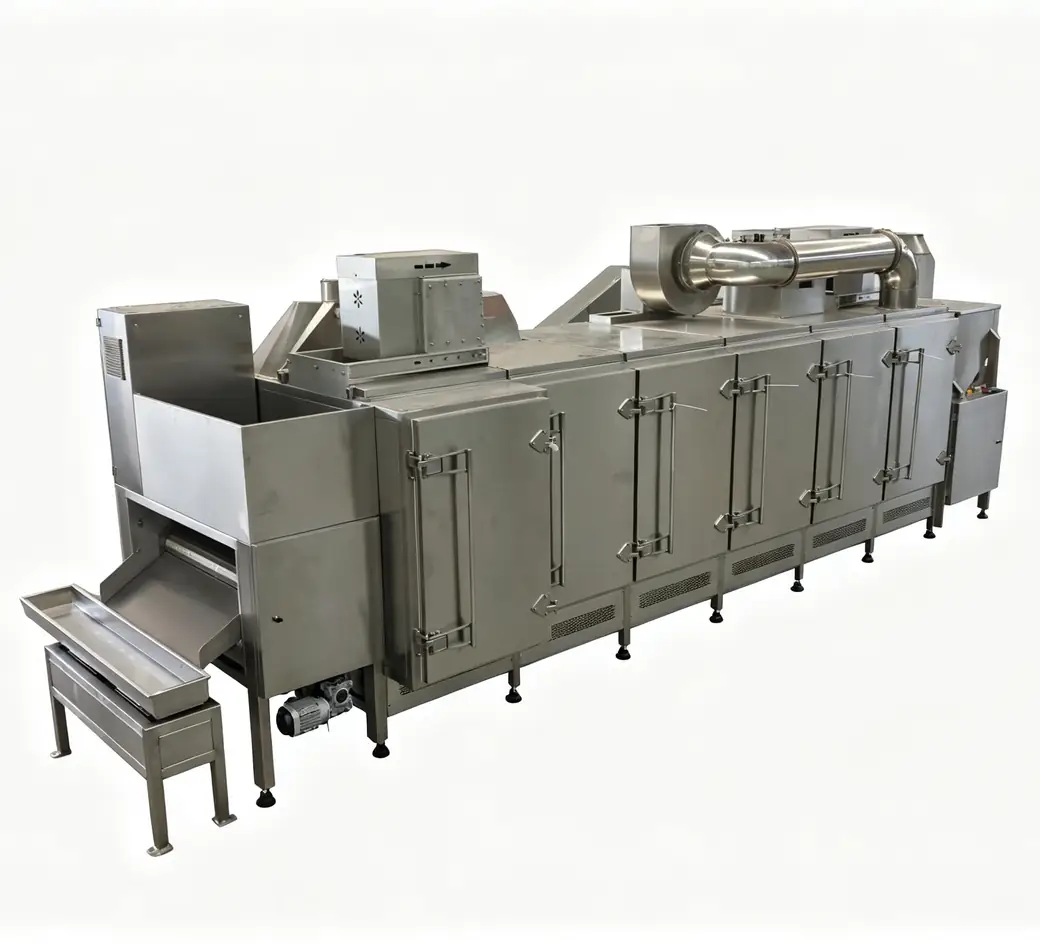
Why gas dominates
- Heat from gas is generally several times cheaper per delivered kWh than heat from electricity
- A roasting chamber needs a lot of heat and relatively little mechanical power — that ratio favours gas hard
- A gas burner can swing temperature quickly, which matters when you change roast profiles
- Electrical supply upgrades to a rented building are often slower and more expensive than a gas connection
What this looks like on our oven
The DGKX-C splits the two supplies cleanly. Heat comes from a forced-draught Riello 40 FS20 gas burner on the roof of the roasting chamber, with base temperature freely adjustable within a 200 °C range. Electricity runs drives, fans and controls only — total 9.5 kW at 380 V.
That is the whole argument in one specification: you get industrial roasting heat without an industrial electrical connection.
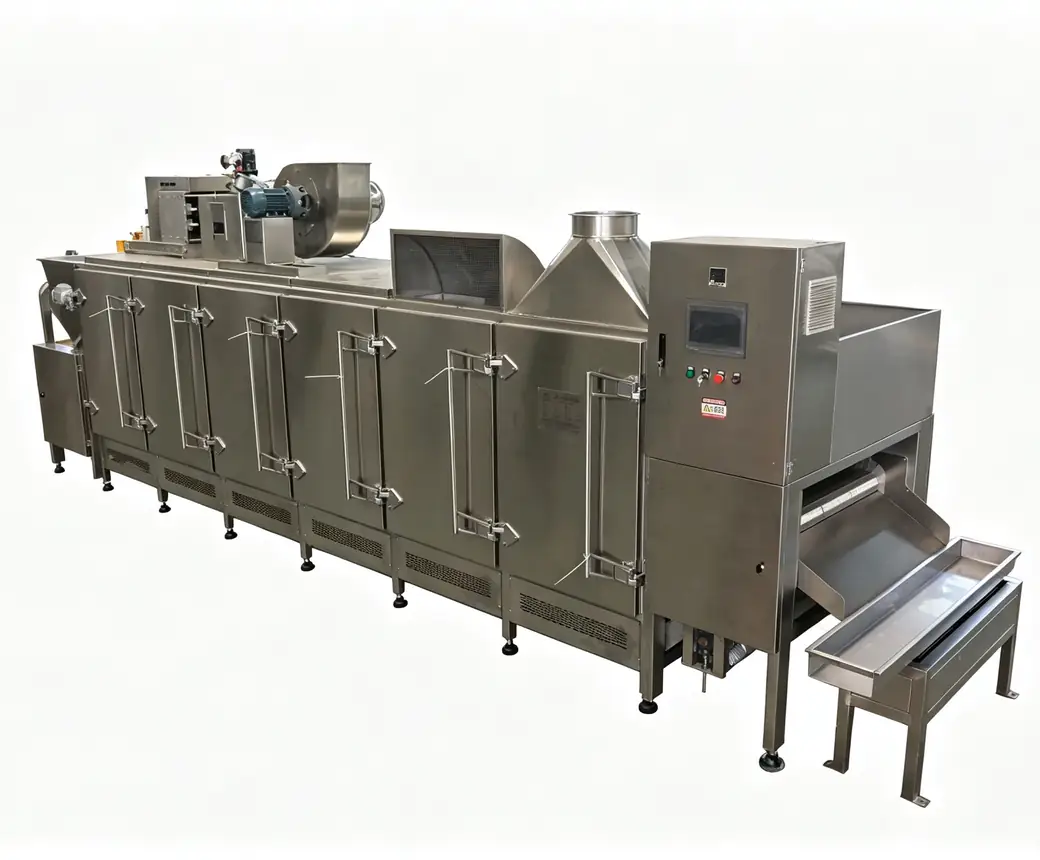
Two cases where electric wins
First, where gas is not available and cannot be brought in. A rented unit in a city industrial park with no gas main and no permission for LPG storage is a real constraint, not a preference.
Second, small batch and R&D work. A rotary pan at pilot scale draws little enough heat that the price difference stops mattering, and electric is simpler to install and permit.
The number to ask your own utility for
- Your industrial gas tariff per m³ or per kWh, and any standing charge
- Your industrial electricity tariff per kWh, including demand charges
- Whether your site has spare electrical capacity, and what an upgrade costs and takes in weeks
- Whether LPG storage is permitted on your site if there is no gas main