
Where the return comes from, in order
- Price uplift — blanched kernel sells at a premium over red-skin kernel into confectionery, peanut butter, bakery and snack markets
- Yield — a well-tuned dry process keeps kernels whole; whole kernels sell higher than splits, and splits sell higher than fragments
- No wastewater — dry blanching uses no water, so there is no effluent treatment plant, no discharge permit and no water bill
- Labour — real, but the smallest of the four
Why dry, not wet
Wet blanching softens the skin with hot water or steam, then requires a drying stage to bring the kernel back to a storable moisture. That is a second machine, a second energy bill, and a wastewater stream that in the EU and North America is a permitted discharge with real compliance cost.
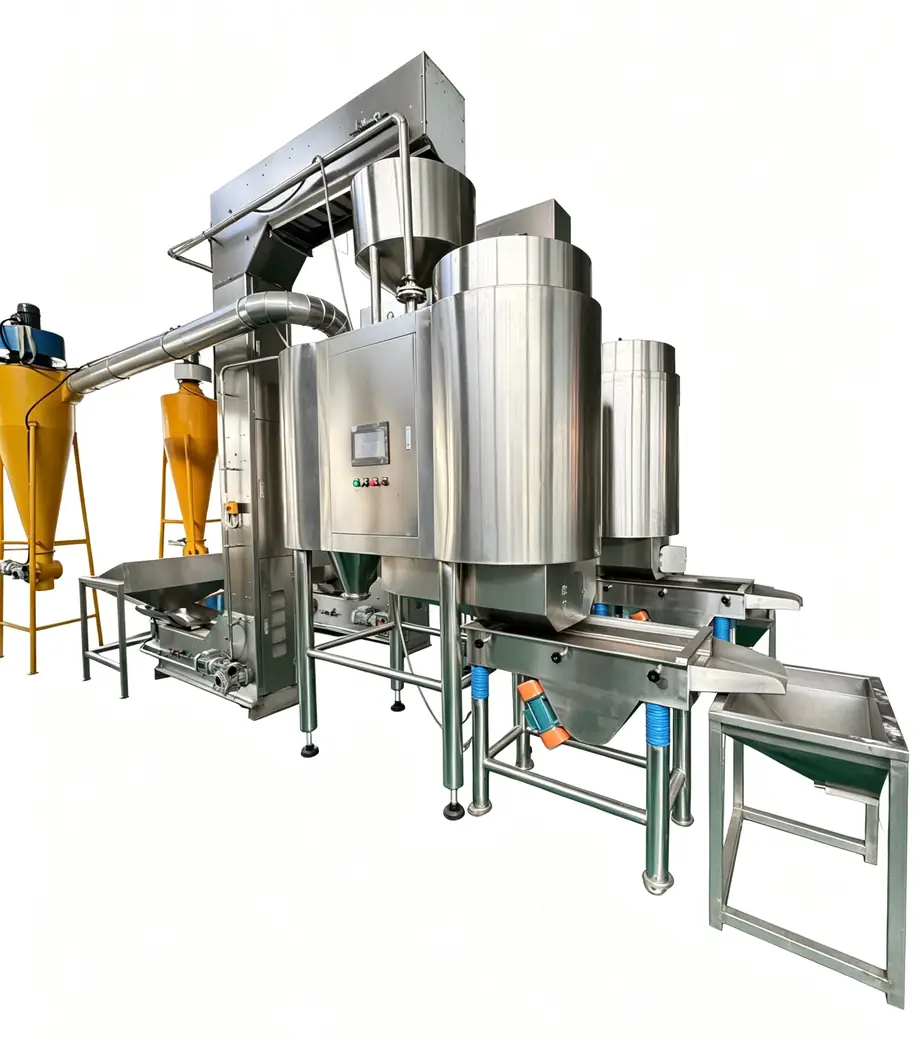
The dry route uses low-temperature drying to loosen the red skin, then rubbing between adjustable rollers and air separation to carry the skin away. Kernels stay whole, and a cyclone collects the skin as a dry by-product you can sell as feed rather than pay to dispose of.
The one thing that decides your yield
Kernel moisture entering the peeler. Everything else is secondary. Too wet, the skin stretches instead of cracking and removal rate collapses. Too dry, the kernel itself is brittle and breakage rises.
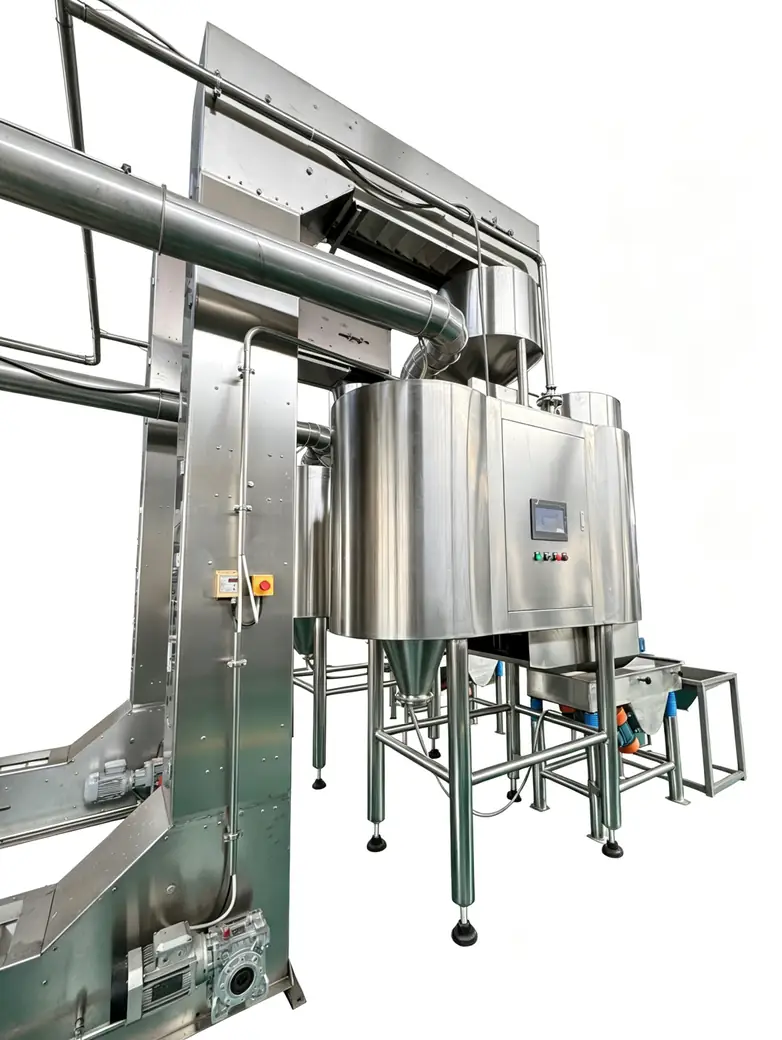
This is why blanching lines should be quoted with the drying stage, not as a standalone peeler. A peeler bought alone, fed by whatever moisture the previous process happens to deliver, is the most common cause of disappointing blanching results.
Adding the splitter
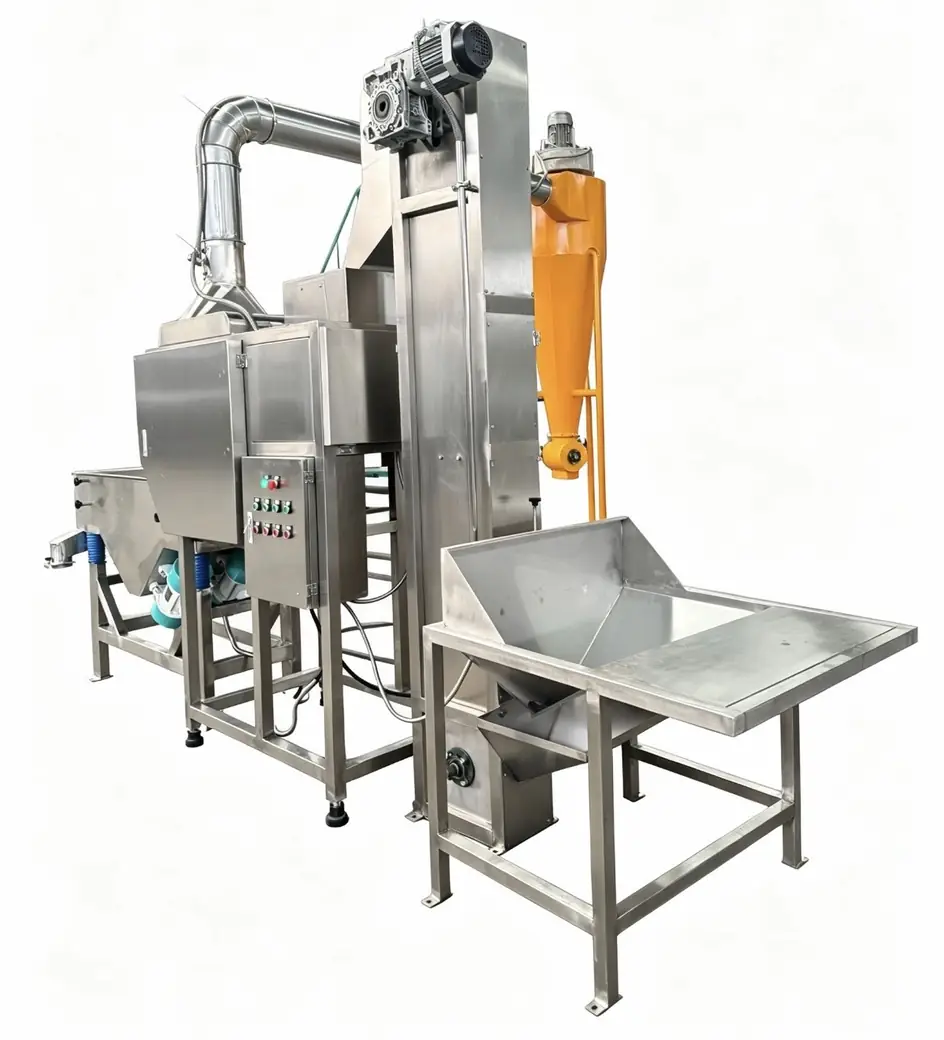
If you are already blanching, splitting into half kernels is a small incremental step on the same line and opens a second product: half kernels for confectionery and bakery, plus the ability to remove the germ, which is the most bitter part of the kernel. Airflow and roller gap are set for the kernel grade being processed.