The five things that move the number most
| Driver | Effect | Why |
|---|---|---|
| Throughput (kg/h) | Large | Bigger chamber, bigger burner, heavier frame, larger drives |
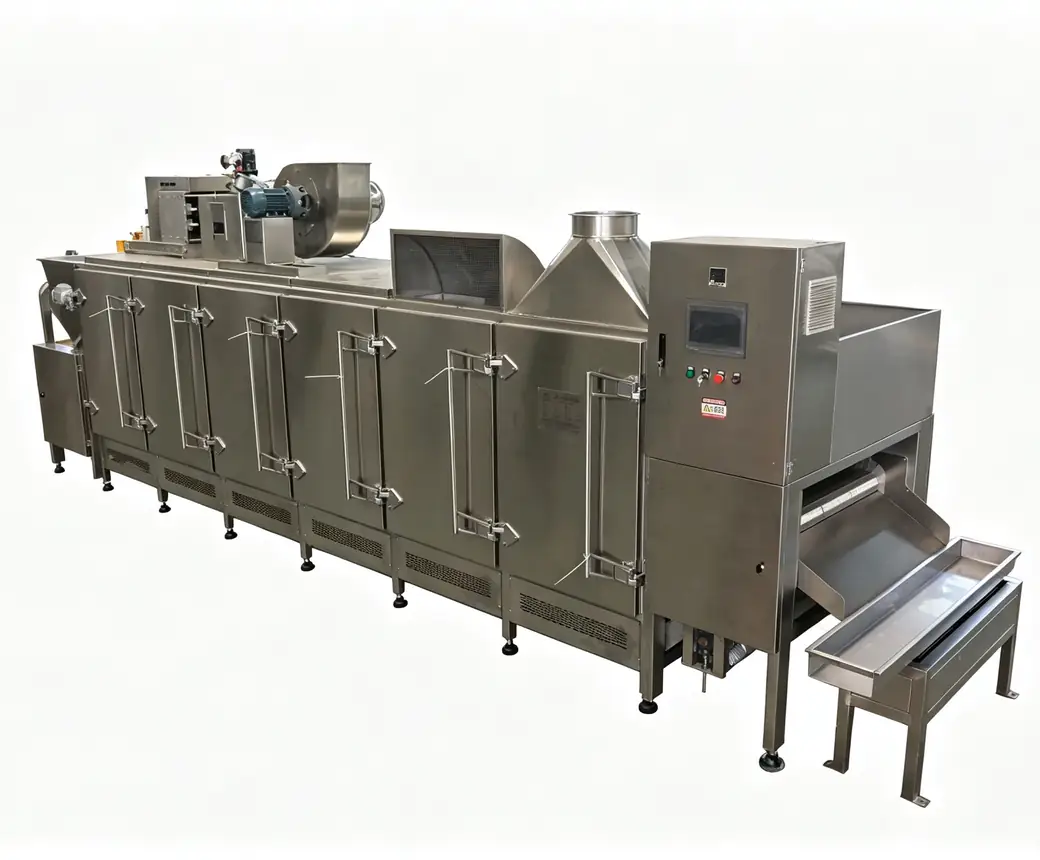
| Batch vs continuous | Large | Continuous is more machine for the same nominal output |
| Stainless grade and extent | Medium–large | Food-contact SUS304 is a given; how much of the frame is also stainless is a choice |
| Automation level | Medium | Manual valves vs PLC touch-screen process control |
| Non-standard voltage / frequency | Small–medium | Motors, gearboxes and control cabinet specified for the destination grid |
What should NOT be an extra
- Food-contact surfaces in SUS304 — this is the baseline, not an upgrade
- English operating manual, electrical wiring diagrams and spare-parts list with part numbers
- Layout drawing with foundation and utility points
- Packing list and export packing
- Video commissioning and remote guidance
Where cheap quotations hide the difference
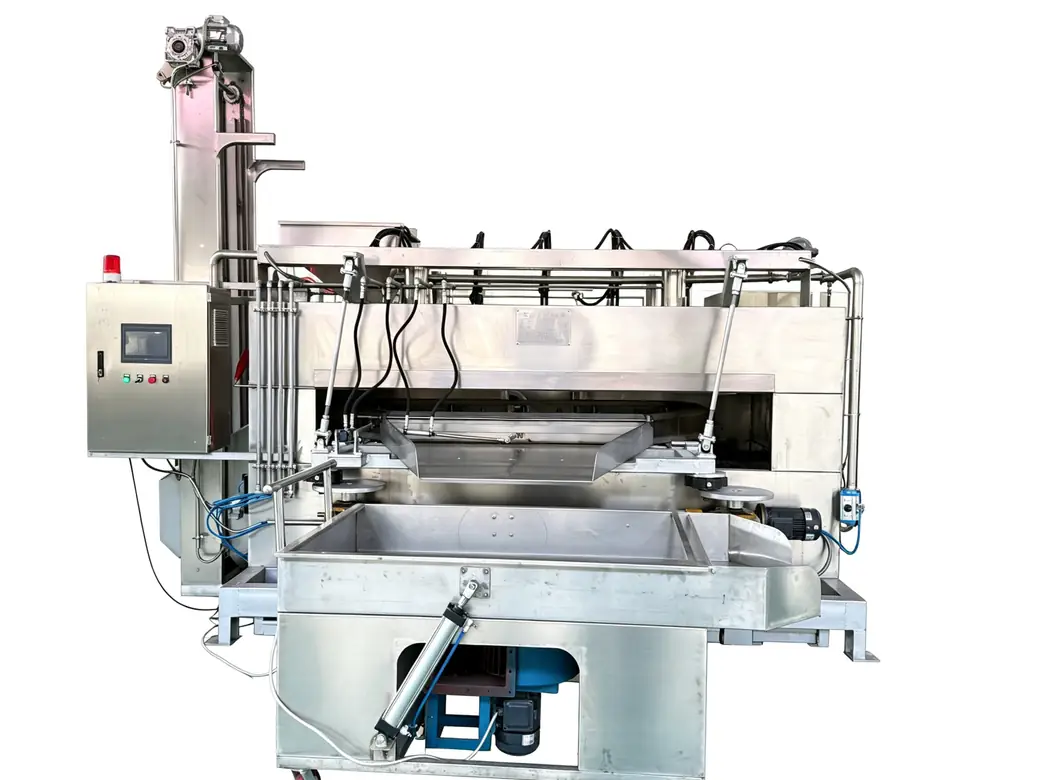
When two quotations for the same nominal output differ a lot, the gap is almost always in one of these places: steel thickness and frame material, insulation of the roasting chamber, the burner brand, the control system, and whether cooling and discharge are included or listed as options.
Insulation is the sneakiest one. A poorly insulated roasting chamber costs less to build and costs you gas every single day it runs. Our DGKX-C chamber is insulated specifically to raise thermal efficiency and cut gas consumption — ask any supplier what their chamber insulation is and watch how they answer.
How to get a number you can actually budget against
- Tell us the finished snack you want to sell, not the machine you think you need
- Tell us target kg/h, and say whether that is raw input or finished output
- Tell us destination country and grid voltage/frequency
- Send a photo or a sample of the product you are trying to match
- We return a machine list, floor layout, utilities schedule and budget price