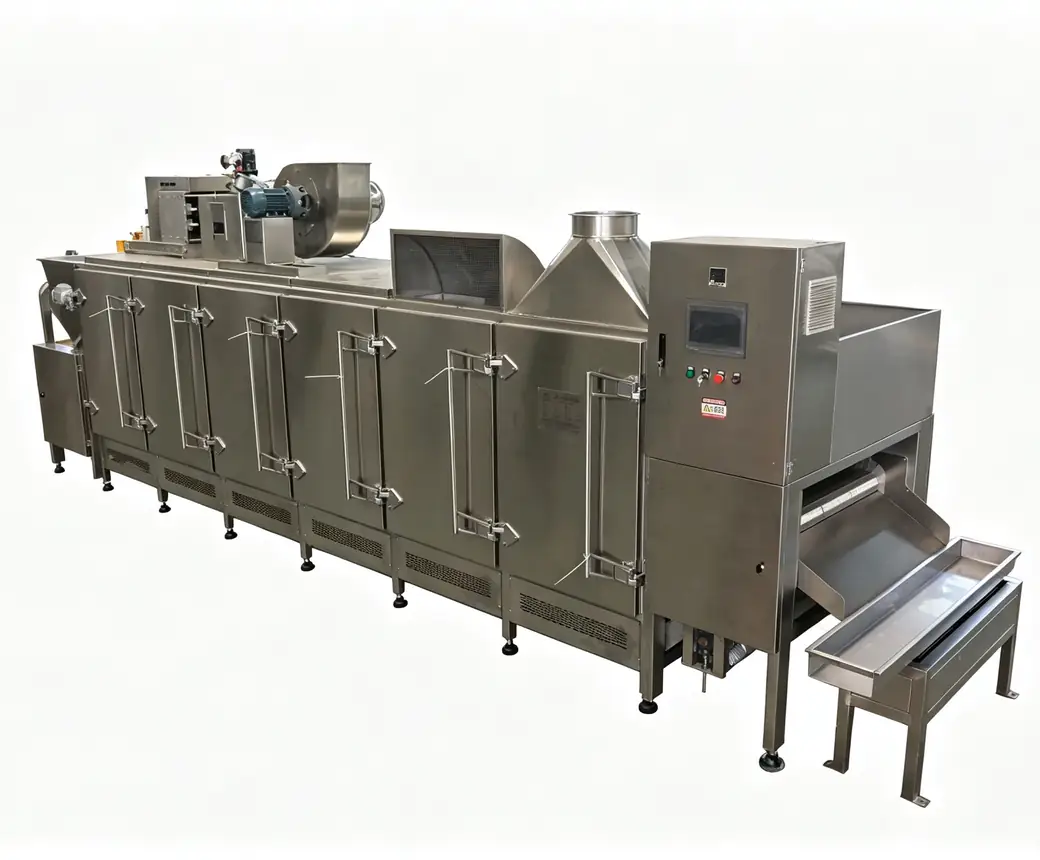
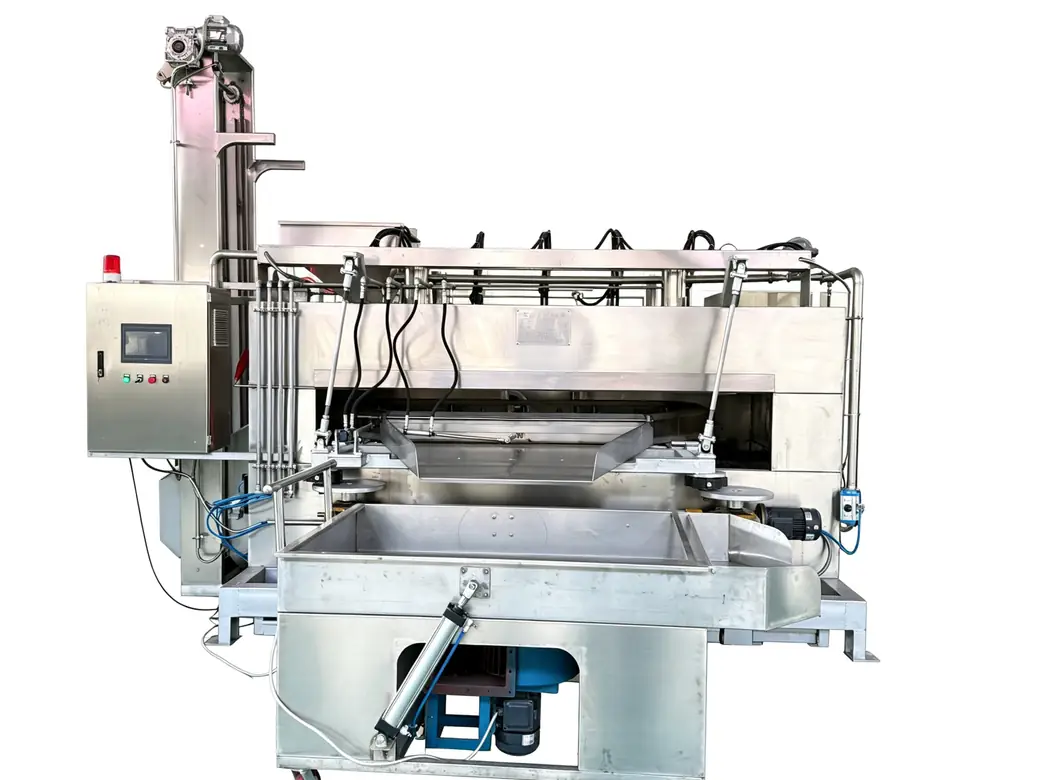
Cashews are a different problem
- Highest raw material cost of the common snack nuts — every broken kernel is money on the floor
- Curved, uneven shape means they do not sit in a flat even bed on a mesh belt
- Almost always sold in multiple flavours: salted, honey, chilli, black pepper, wasabi
- Batch sizes per flavour are usually small, and changeovers are frequent
Why a rotary pan roaster fits
A rotary pan roaster runs 30–60 kg per batch — roughly 120–150 kg/h. That sounds like a limitation until you count the changeovers. If you sell six flavours, a continuous oven means either six dedicated lines or six purges a day.
The pan also handles the fragile shape better. Kernels tumble in a rolling bed instead of sitting under their own weight on a belt, and there is no transfer drop between roasting and cooling zones.
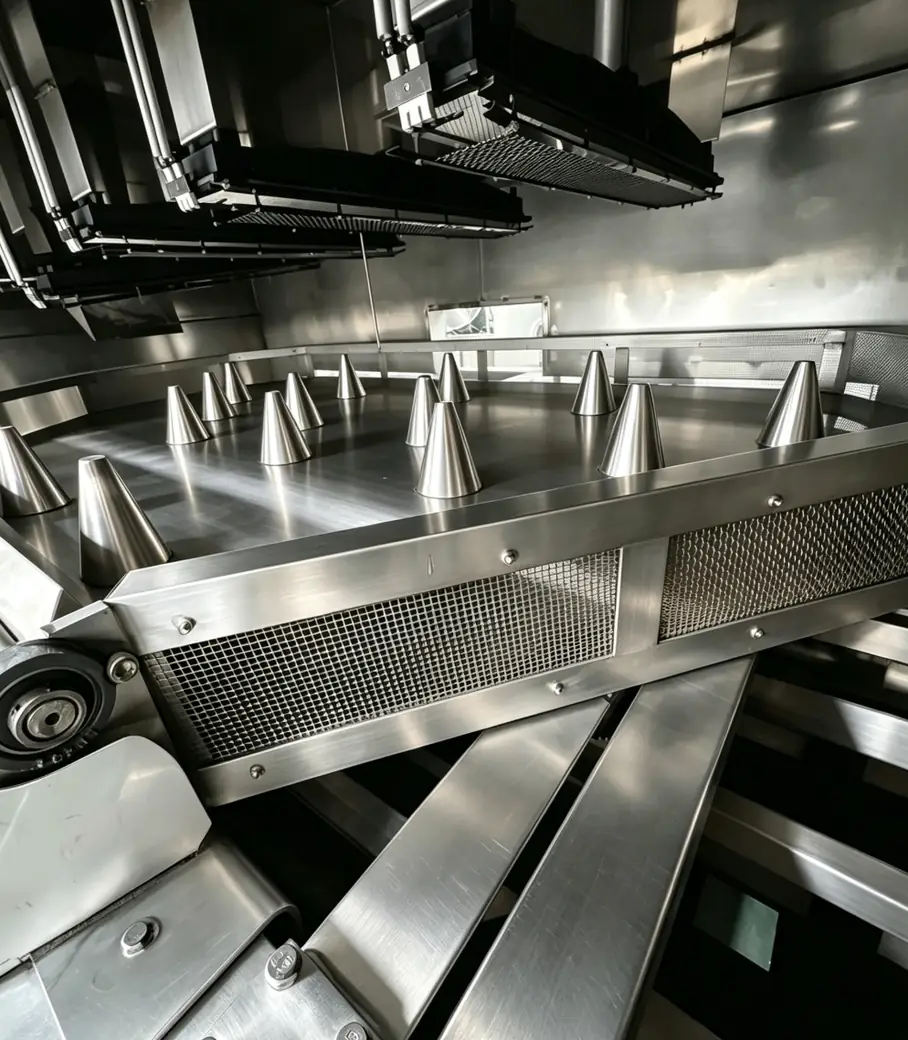
Where seasoning happens
Two routes, and they produce genuinely different products.
Dry seasoning is applied after roasting while the kernel is still warm, usually in a tumbling drum with oil as a carrier so the powder sticks. Simple, fast, and the flavour sits on the surface.
Coated products — honey roasted, candy-coated, crackers — go through a coating pan instead, where syrup and powder are built up in layers. That is a different machine and a much longer process, but it is also where the higher retail price is.