
Private label changes the priorities
- Batch-to-batch consistency is contractual, not aspirational — a retailer specification is a document you can be audited against
- Changeover speed matters because you run several customers' products on the same line
- Traceability of settings matters — you need to prove that this week's batch ran the same curve as last quarter's approved sample
- Headline kg/h matters less than reliable kg/h across a full shift
What that means for machine choice
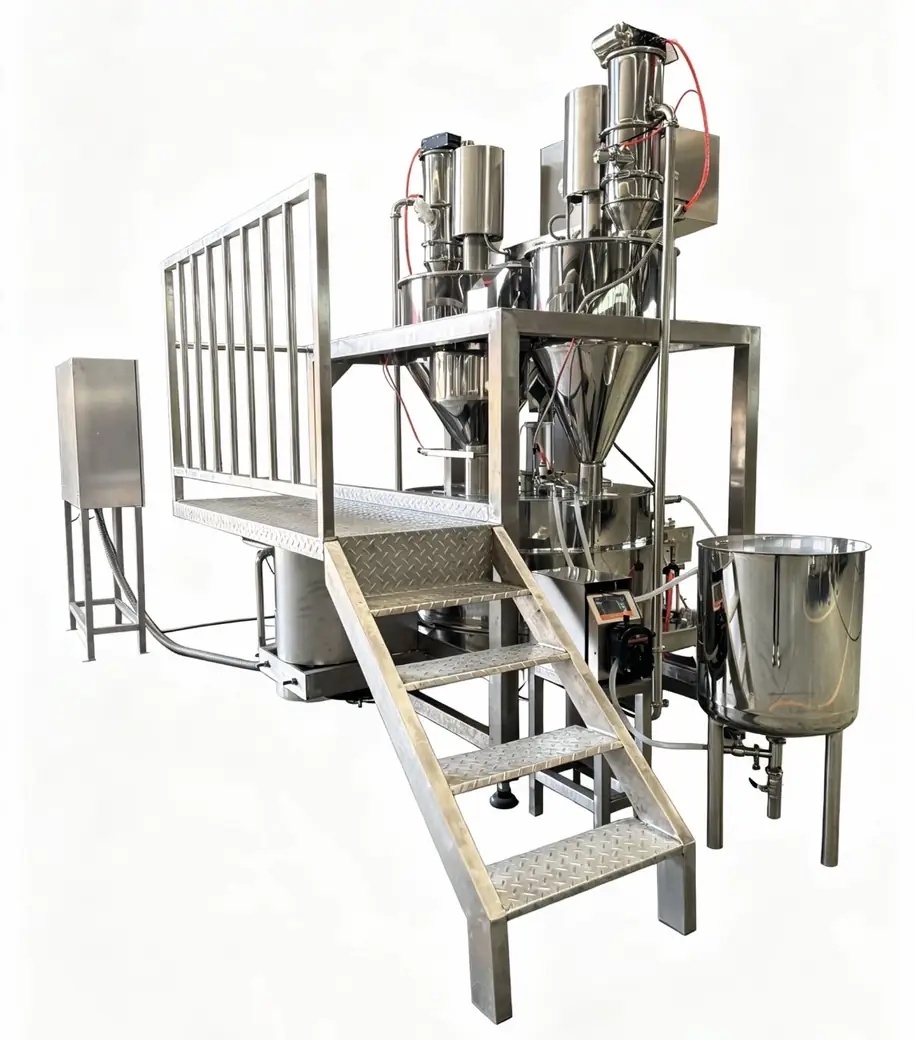
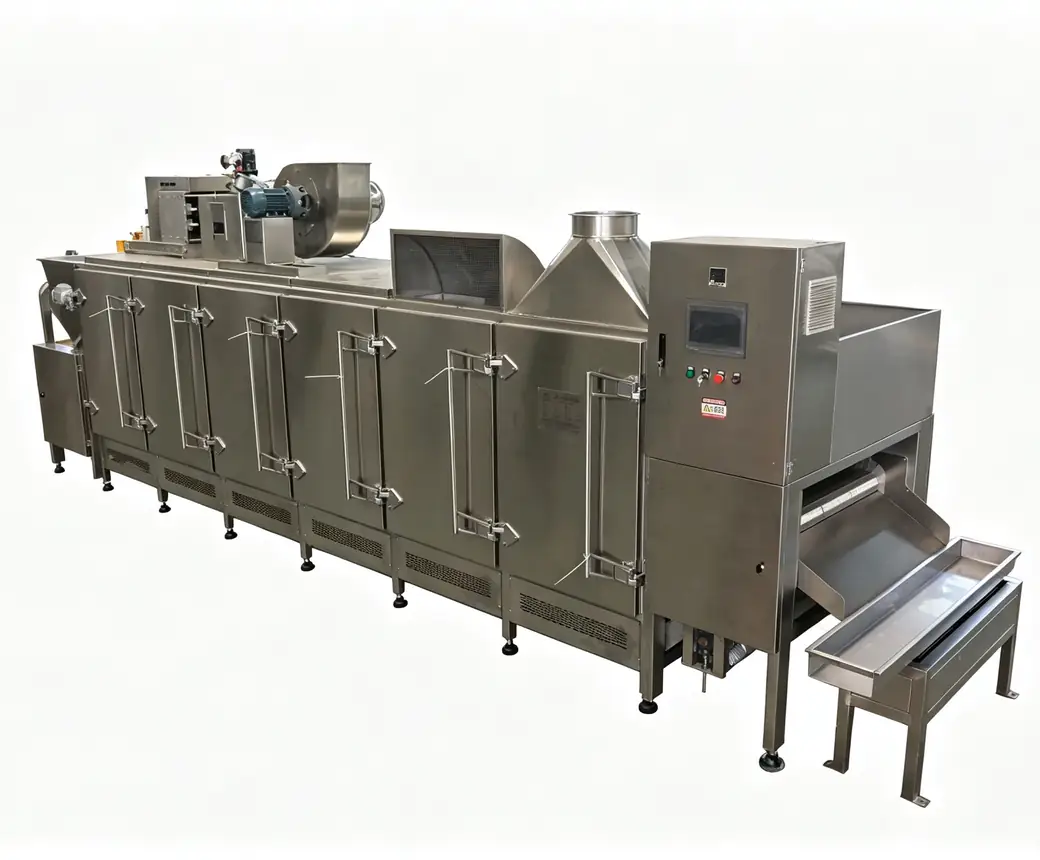
Consistency between batches is where a continuous oven wins clearly: the roast curve is fixed by the zones the product passes through rather than by an operator's judgement on a batch pan.
But if you run many customers' recipes, the changeover cost of a continuous line bites. The configuration that usually fits contract packers is a continuous oven for the two or three highest-volume contracts, plus a rotary pan for everything else and for approval samples.
Grid and documentation
- Polish industrial supply is 400 V / 50 Hz — specified before manufacture and confirmed in the contract drawing
- English operating manual, wiring diagrams, layout drawing and spare-parts list supplied as standard
- Ask early for the dimensioned layout with foundation and utility points so your building work and the machine build run in parallel rather than in sequence
Where the margin sits for a Polish packer
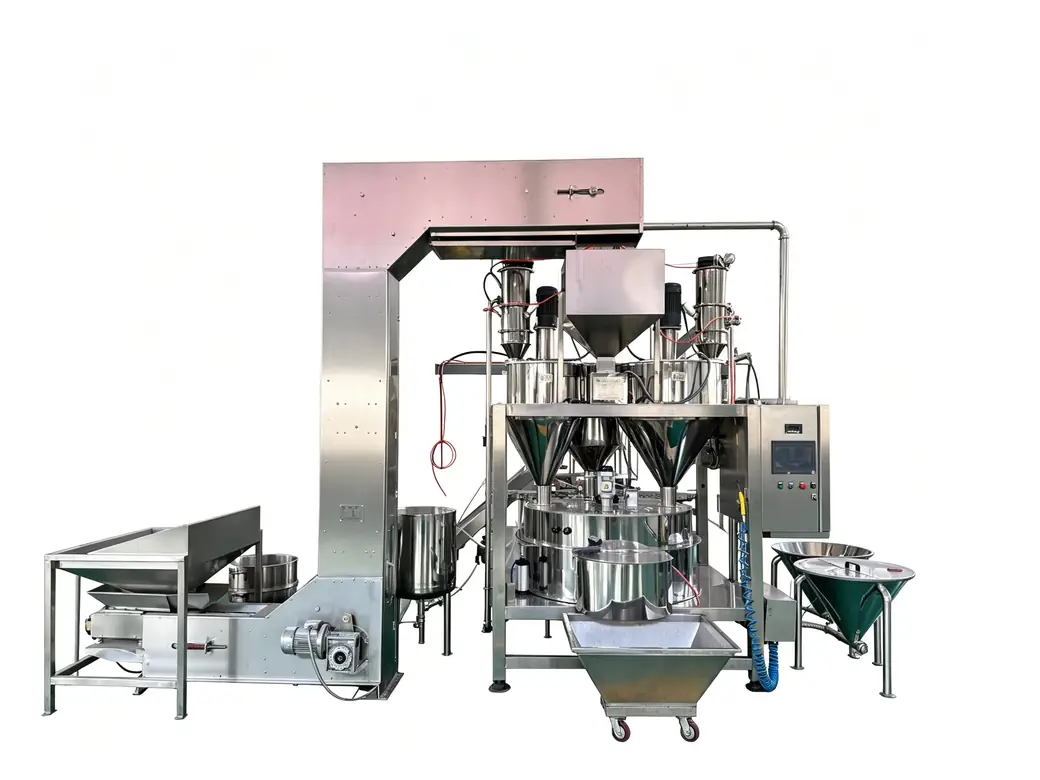
Two places. First, the dicing and grading section — one input becomes several saleable fractions at different prices, which is exactly the flexibility a contract packer needs when customers order different specs.
Second, coating. Coated and honey-roasted products carry a much higher retail price than plain roasted, and coating capability is a service you can sell to brand owners who do not have it in-house.