
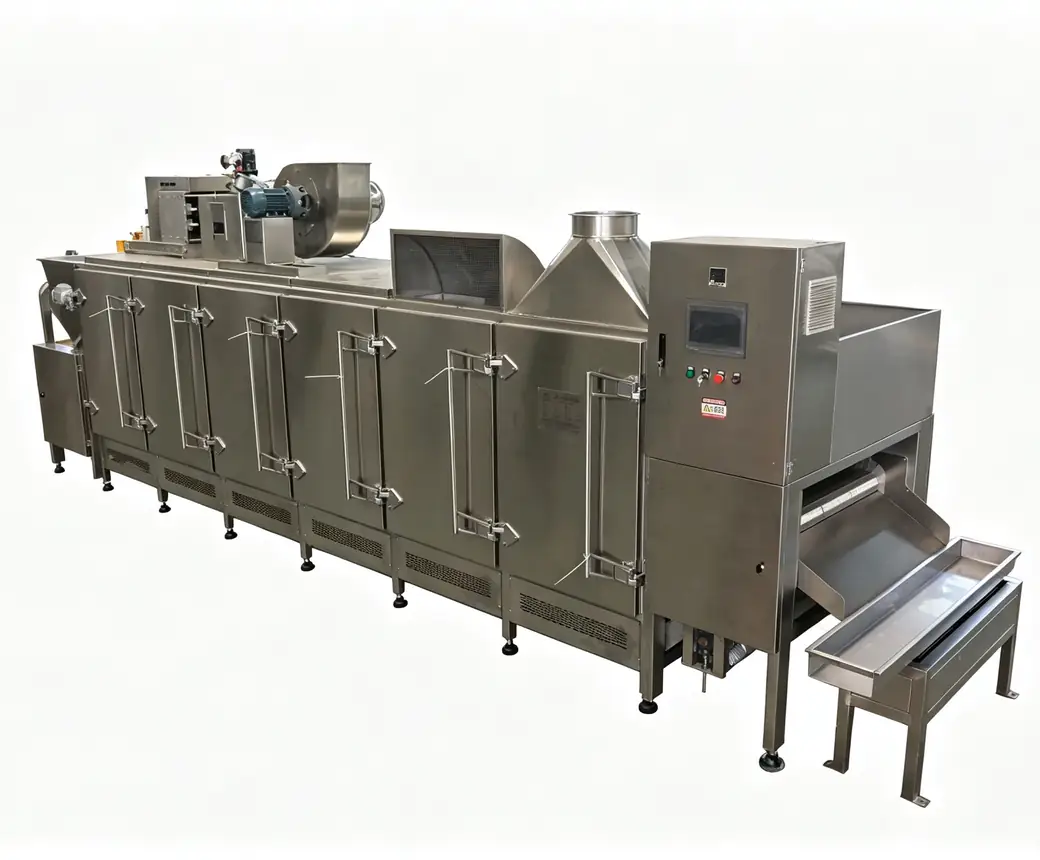
Frequency, not just voltage
North American industrial supply is typically 480 V / 60 Hz, with 220 V / 60 Hz also common on smaller equipment. Frequency changes motor speed, which changes belt speed, fan output and therefore your roast curve — this is not a plug adapter problem.
Motors, gearboxes and the control cabinet are specified for 60 Hz before manufacture and confirmed in the contract drawing. Tell us your grid at enquiry stage; retro-fitting after delivery is far more expensive.
Allergen segregation shapes the layout
US food plants generally run stricter physical separation between allergen groups than plants elsewhere, and peanut is the allergen. If your facility also handles tree nuts or non-allergen product, the practical consequences land on the line layout: dedicated equipment, separate dust extraction, and cleaning access designed in rather than added.
This is worth raising at layout stage. Machines that are easy to strip and clean are cheaper to run in that regime — our peeler, dicer and coating pan are built with open decks and accessible chambers for fast changeover cleaning, but where they sit in your building is a decision to make together.
Running domestic runner peanuts
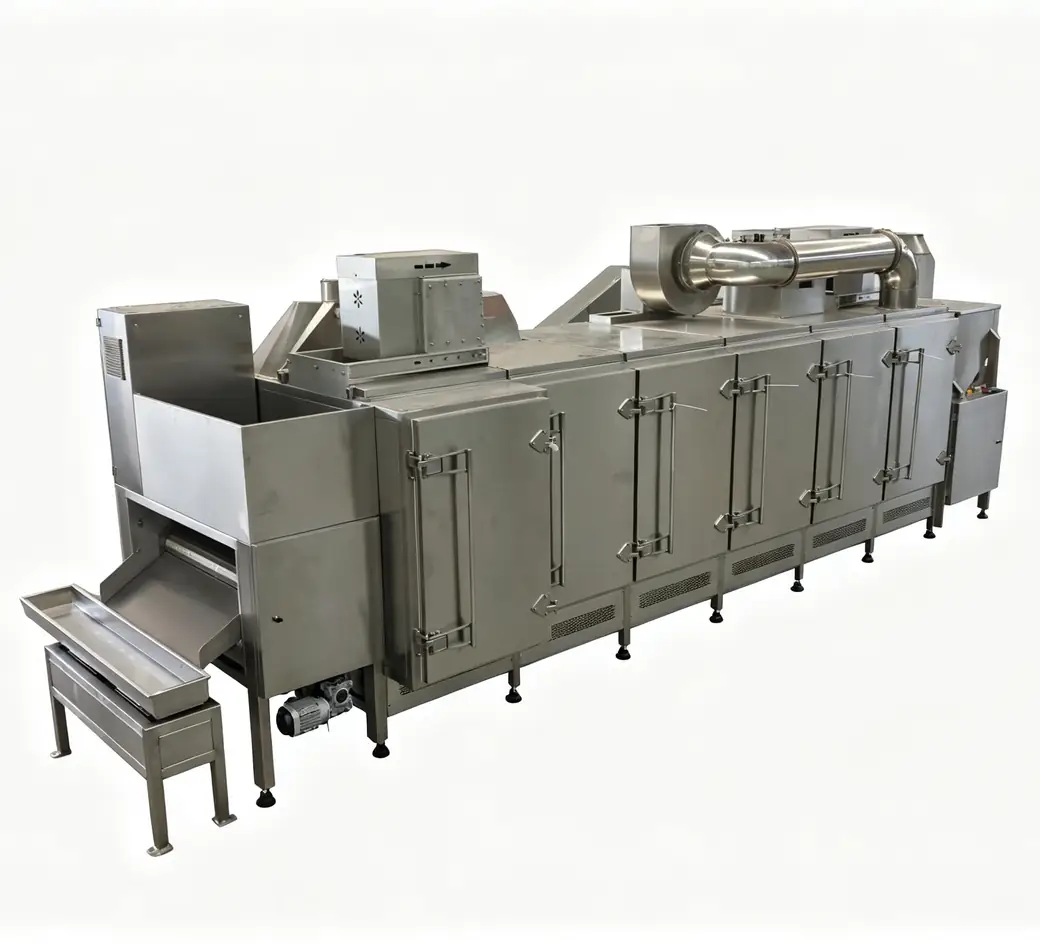
Most US processors are running runner-type peanuts from the southeast, which are consistent in size and generally arrive at a predictable moisture. That is an advantage: a stable incoming moisture makes the drying stage before blanching easier to set and hold.
It also means the roast curve, once established, tends to stay put across lots — so the case for continuous roasting is stronger in the US than in markets working with mixed-origin raw material.
Practical items to settle before ordering
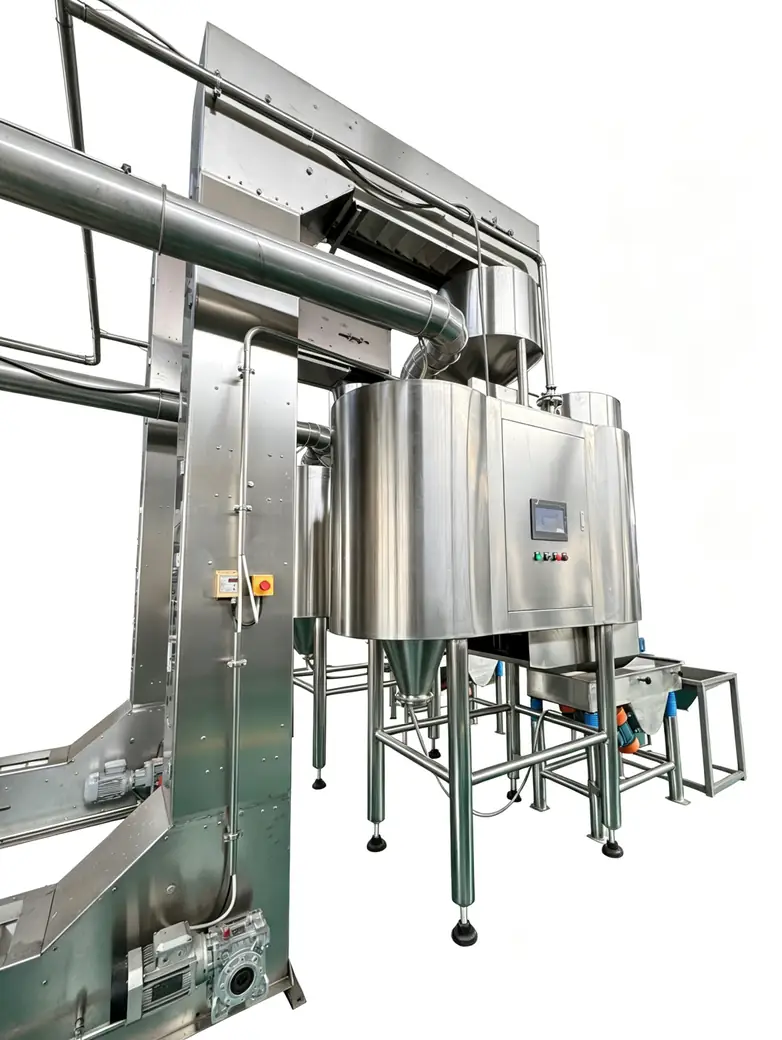
- Grid voltage and frequency at the machine, not at the building entrance
- Whether you want drawings dimensioned in imperial as well as metric
- Gas type and pressure available — natural gas or propane
- Fume extraction route and any local requirement your contractor needs to design to
- Which wear items you want to stock domestically to avoid transit time on a breakdown