Grid specification
German industrial supply is 400 V / 50 Hz three-phase. Motors, gearboxes and the control cabinet are specified for that before manufacture, not adapted afterwards.
This gets confirmed in the contract drawing. Retro-fitting a control cabinet and drives after delivery is far more expensive than specifying them correctly at the start, which is why we ask for destination country and grid at enquiry stage rather than assuming a default.
What German buyers usually ask for that others do not
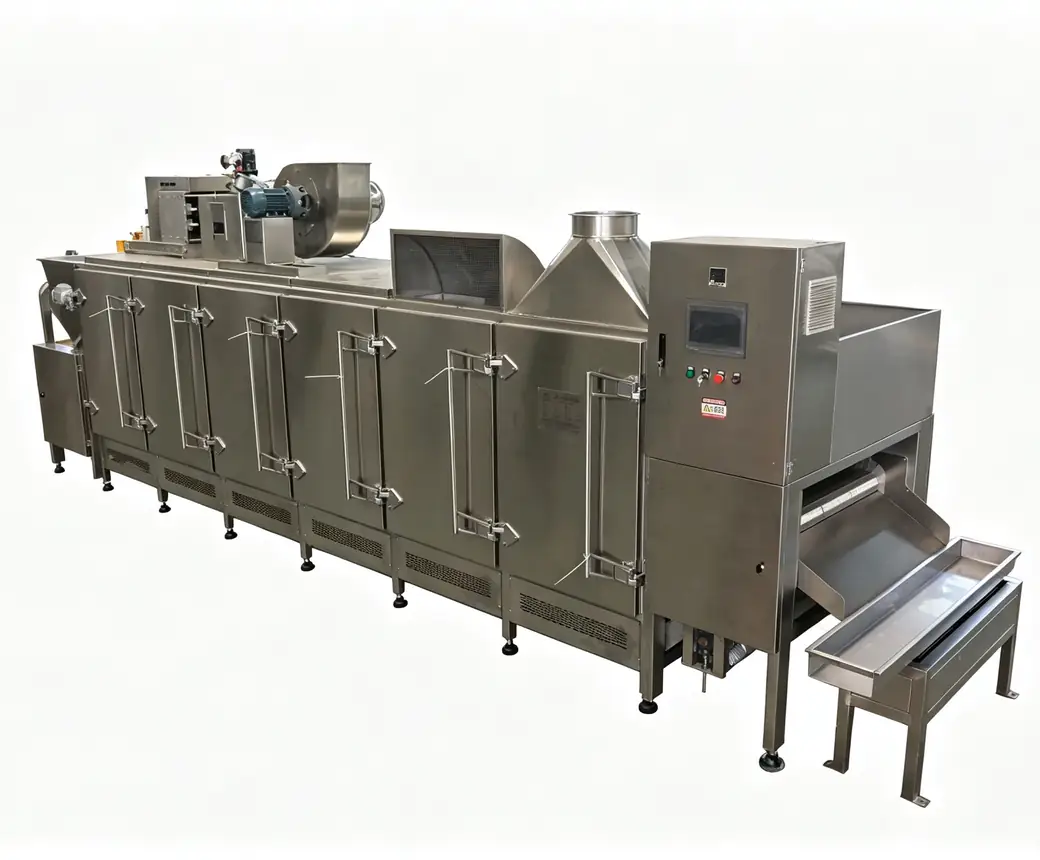
- Dimensioned layout drawing with foundation loads and utility connection points, early — often before the purchase decision
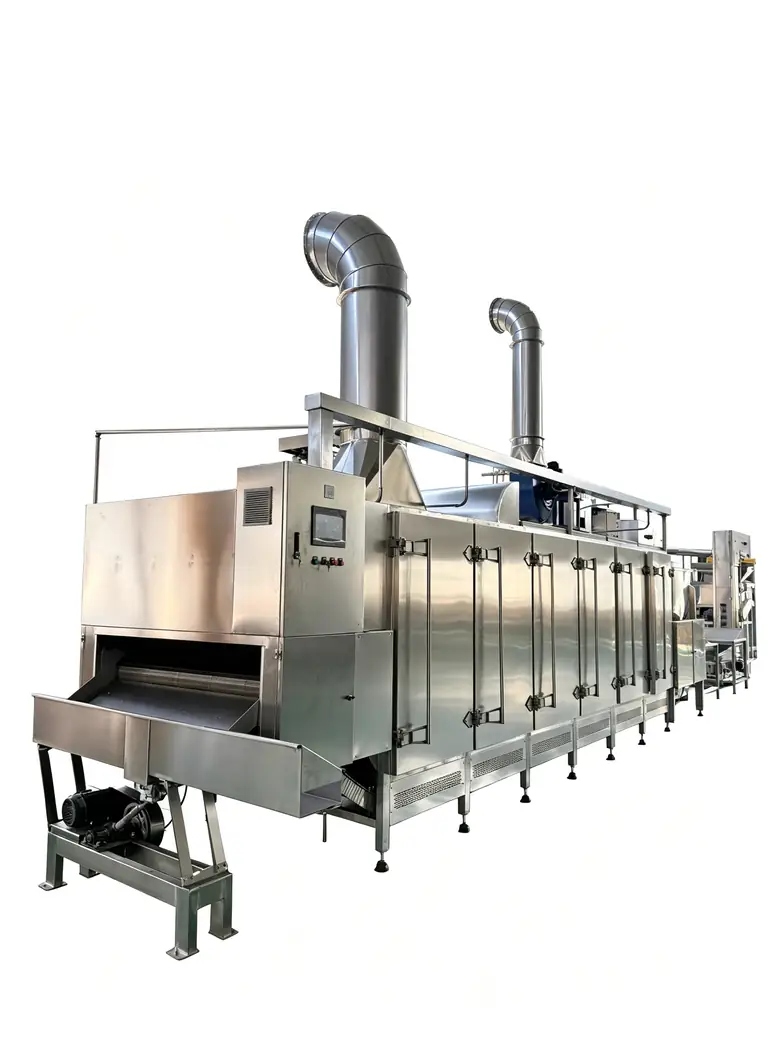
- Clear separation of gas and electrical demand so the building services engineer can plan (our continuous oven is gas-fired for heat, 9.5 kW at 380/400 V for drives and fans)
- A spare-parts list with part numbers so stocking can be planned rather than reactive
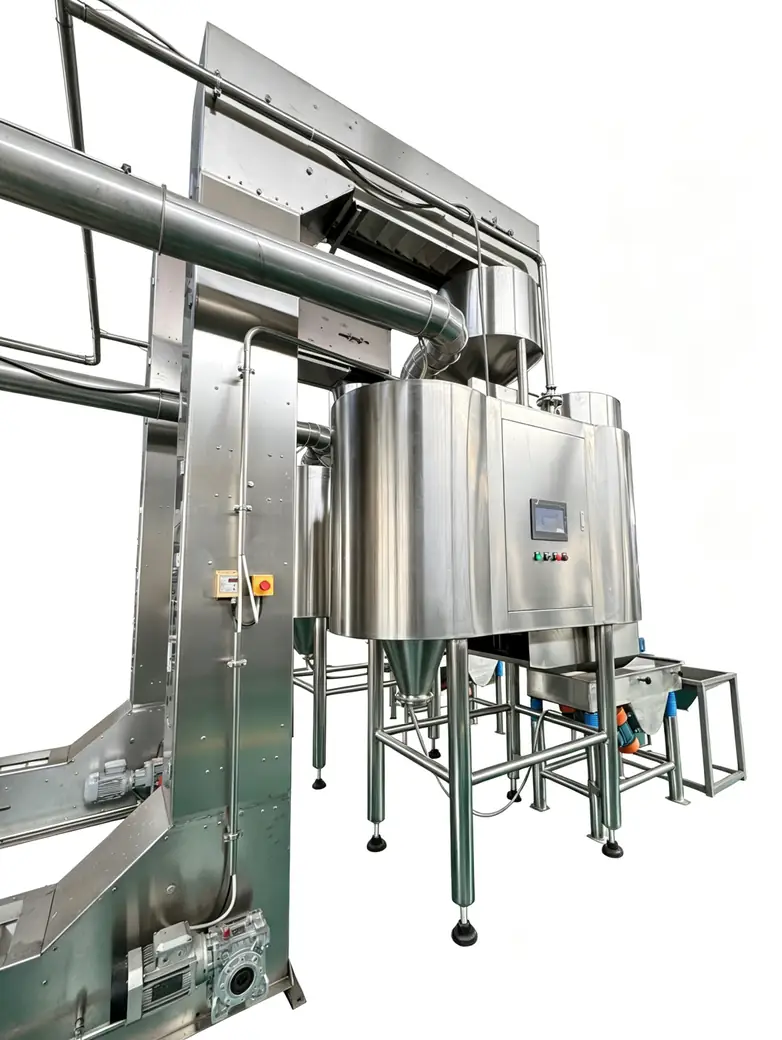
- Fume extraction routing agreed before the building work, not after installation
The organic and clean-label segment
A large share of German nut snack demand sits in the organic and clean-label segment, where the finished product is sold on a short ingredient list. That pushes the process towards dry blanching rather than wet, and towards controlled roasting rather than heavy seasoning to mask an uneven roast.
Dry blanching also avoids a wastewater stream, which in Germany means avoiding a permitted discharge and its ongoing compliance cost. For a plant positioning on sustainability that is a story worth having as well as a cost saving.
Documentation and language
English operating manual, electrical wiring diagrams, layout drawing and spare-parts list are supplied as standard. If you need documentation in German for your own operators or for your internal safety file, raise it at enquiry stage so it is scoped into the order rather than requested after delivery.