
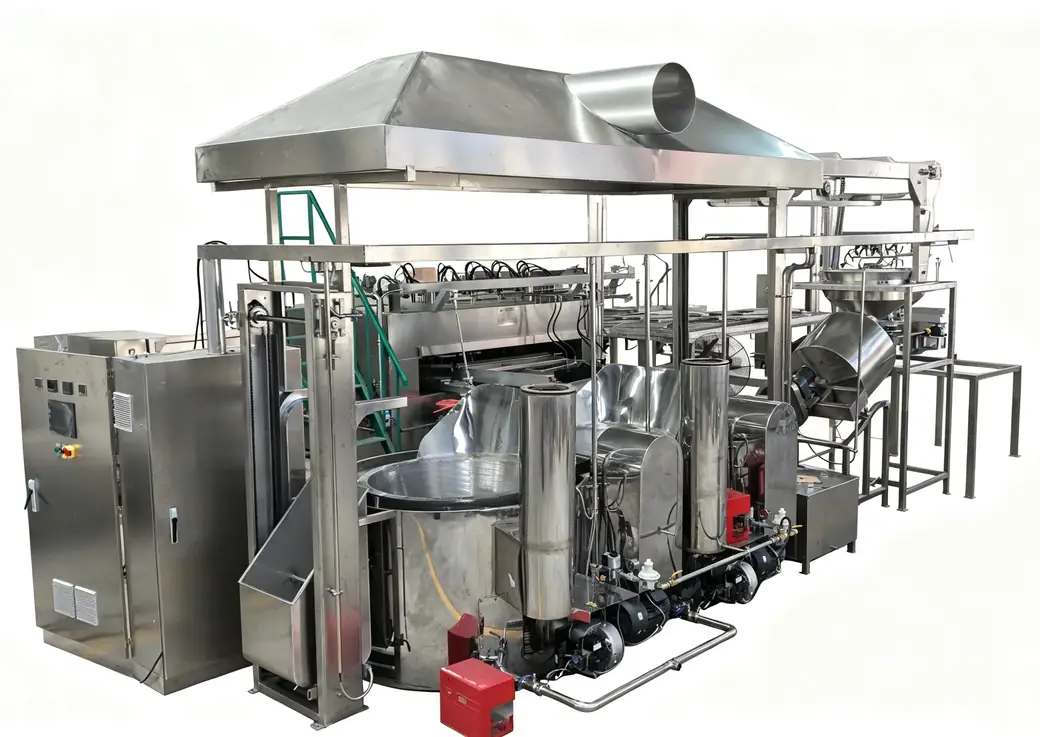
The fryer itself
The YZJ-R batch fryer takes granular food such as peanut kernels, almonds, broad beans and green peas. A bucket elevator doses material into the pan. During frying the basket is periodically raised clear of the oil and lowered again so every kernel fries evenly. At the end of the cycle the lifting device tips the batch into the de-oiling unit and the pan returns for the next load.
The machine is built from a frying screen body, frame, lifting device, oil filtration system, fume extraction system and extraction hood.
Oil is the real system
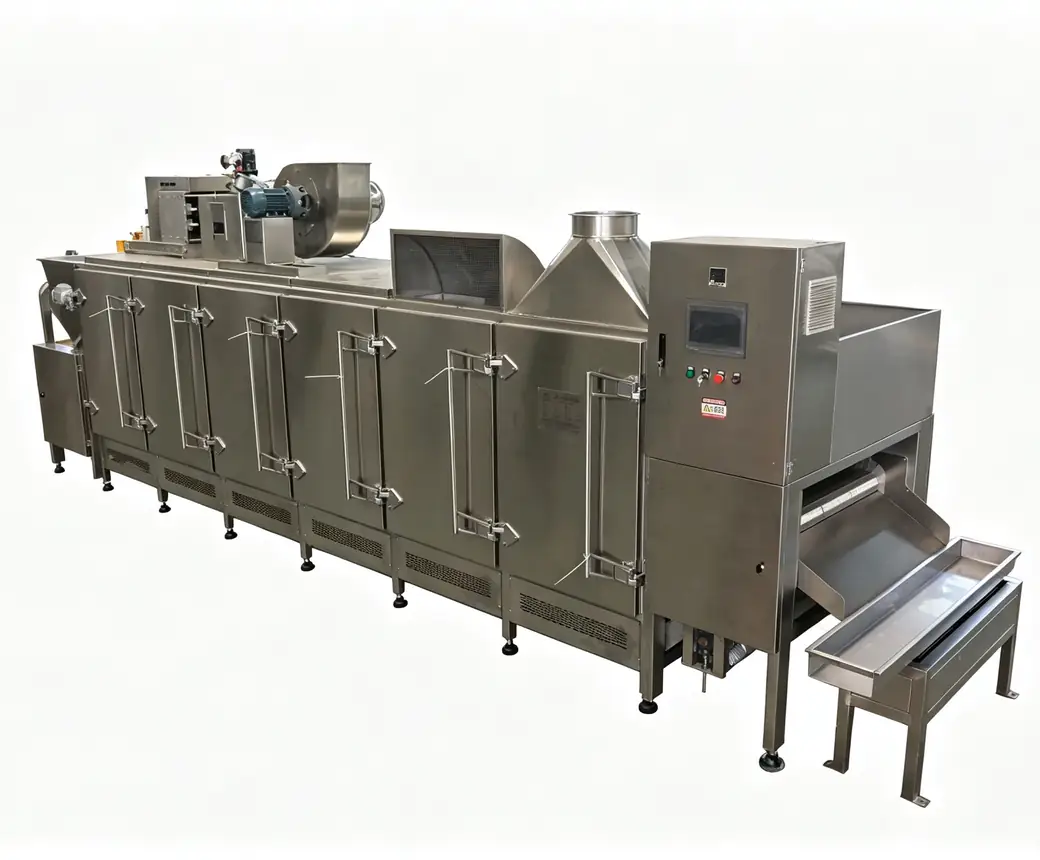
- Oil consumption during normal running is about 2% of throughput — at 1000 kg/h that is 20 kg an hour absorbed into product
- The optional filtration circuit cleans the oil while production continues, which noticeably raises efficiency and oil service life
- Oil quality drifts before it fails; product colour and flavour move with it, so filtration protects consistency as well as cost
- Plan oil storage, transfer and disposal at the layout stage, not after installation
De-oiling decides the product
Direct tipping into the de-oiling unit at the end of the cycle is what keeps surface oil off the finished snack. Under-de-oiled product feels greasy, goes rancid faster and fails a lot of retail specifications.
This is one of the few areas where you should not economise. If a quotation for a frying line looks unusually cheap, check whether de-oiling and extraction are actually in it.
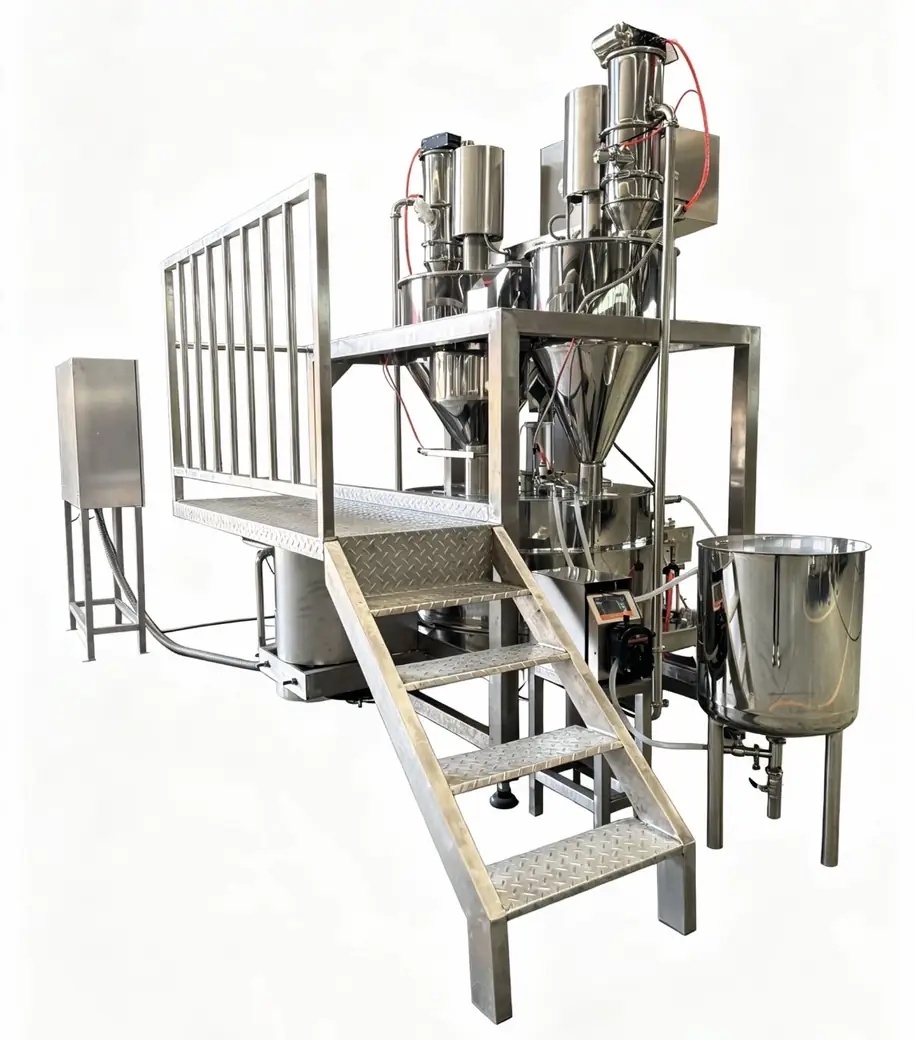
Extraction and the building
An integrated extraction hood and flue keep the workshop clear of fumes. At industrial scale this stops being a comfort item and becomes a compliance and insurance item in most destination markets. Route the flue to outside air and confirm the requirement with your local authority before the building work starts.