
What a roasting curve actually is
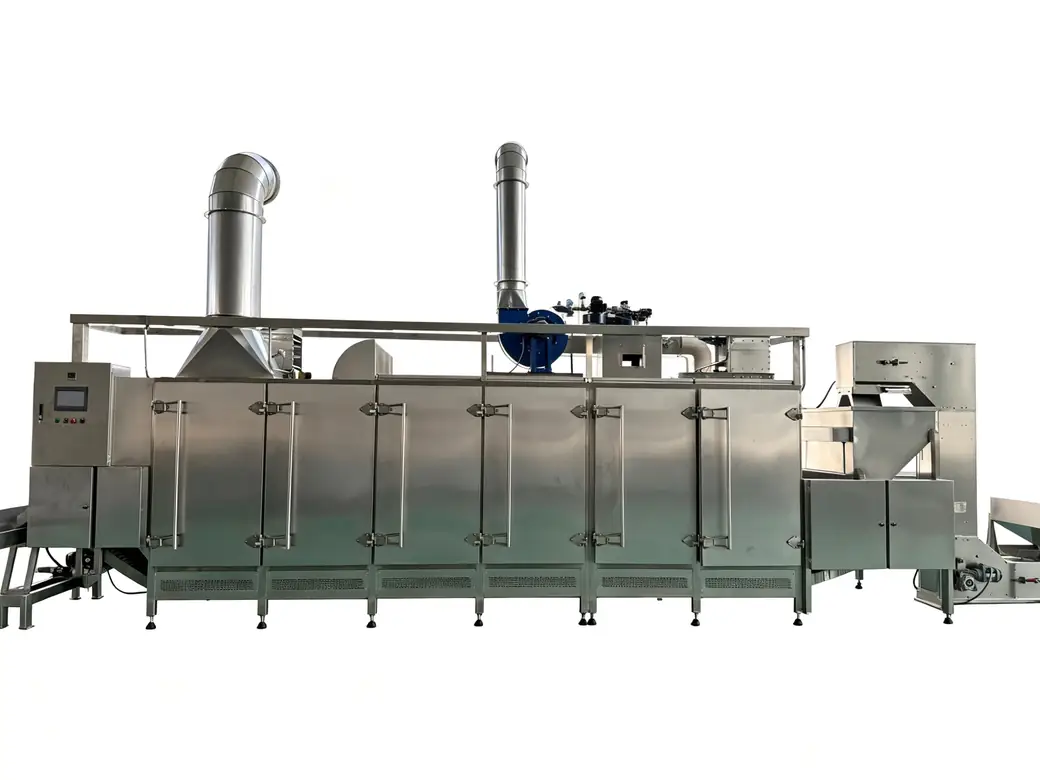
A roast curve is the temperature the product experiences over time, not the setpoint on the panel. On a continuous oven that curve is created by zones — the product moves through them — rather than by changing the setpoint over time as you would in a batch pan.
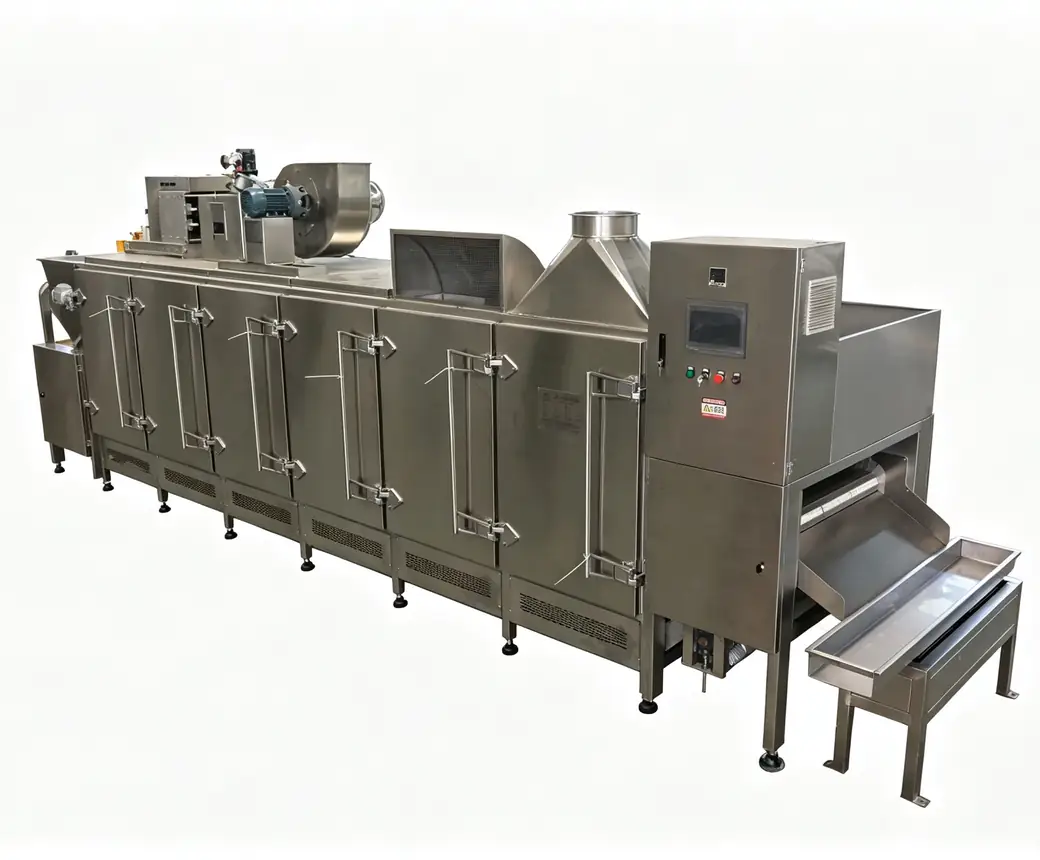
The DGKX-C is built around that idea: a feeding zone, a roasting zone, a transition zone, a cooling zone and a vibrating discharge. The stainless feed hopper has a height adjustment so the material lies evenly on the belt and so you can change bed thickness to tune output.
What each stage is for
| Stage | Purpose | What goes wrong if it is off |
|---|---|---|
| Drying / low temperature | Remove free moisture, loosen red skin | Skin will not release in the peeler; case hardening |
| Roasting / high temperature | Develop colour and flavour | Pale and raw, or scorched outside and raw inside |
| Transition | Even out temperature across the bed | Colour varies within the same batch |
| Cooling | Stop the roast | Carry-over roasting — product keeps darkening in the bag |
Carry-over is the mistake nobody expects
A hot kernel keeps cooking after it leaves the heat. If you judge colour at the discharge and it looks right, the product in the bag will be darker than the product you approved.
This is why the cooling zone matters as much as the roasting zone. On the DGKX-C a centrifugal high-pressure cooling fan draws ambient air for heat exchange immediately after roasting, so the roast stops when you decide it stops rather than fifteen minutes later in a tote bin.
Three knobs, in the order you should touch them
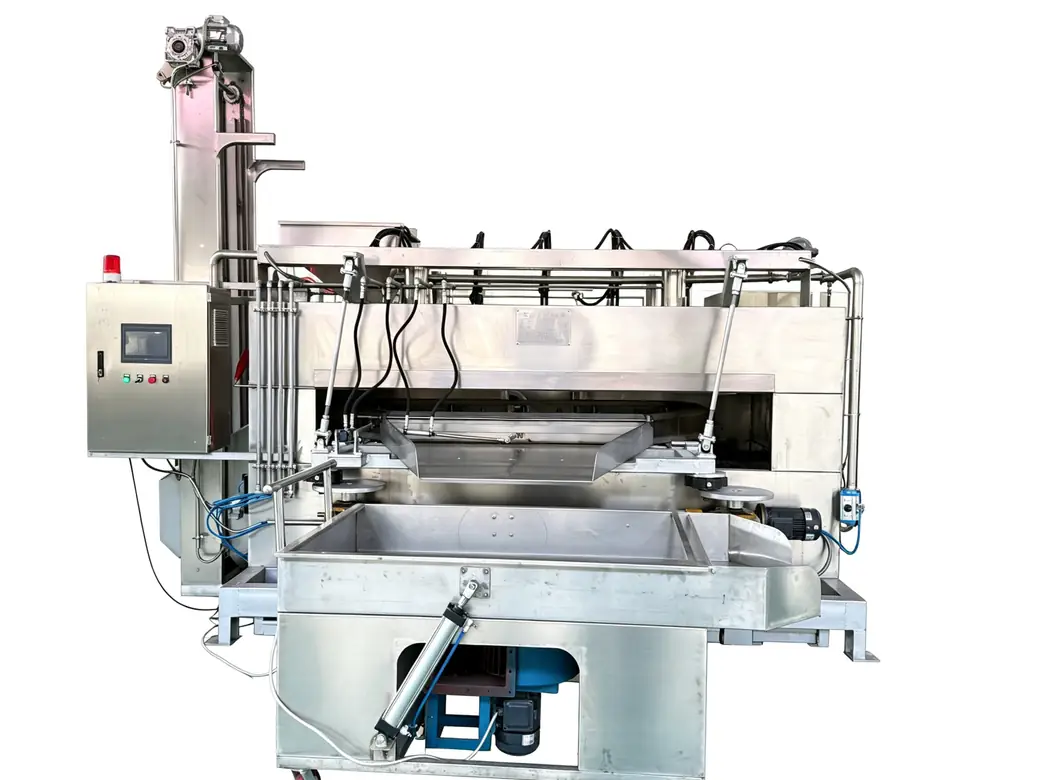
- Bed thickness — set by the feed hopper height. Thicker bed, more throughput, less even heat. Change this first.
- Belt speed / dwell time — how long the product sits in each zone.
- Burner base temperature — the DGKX-C burner is freely adjustable within a 200 °C range. Change this last, and in small steps.
How to make a curve repeatable
- Write down bed thickness, belt speed and burner setting for every approved product — not just the temperature
- Judge colour after cooling, never at discharge
- Fix one variable at a time; changing two at once tells you nothing
- Record the raw material lot — kernel size and incoming moisture shift the curve more than most operators expect