
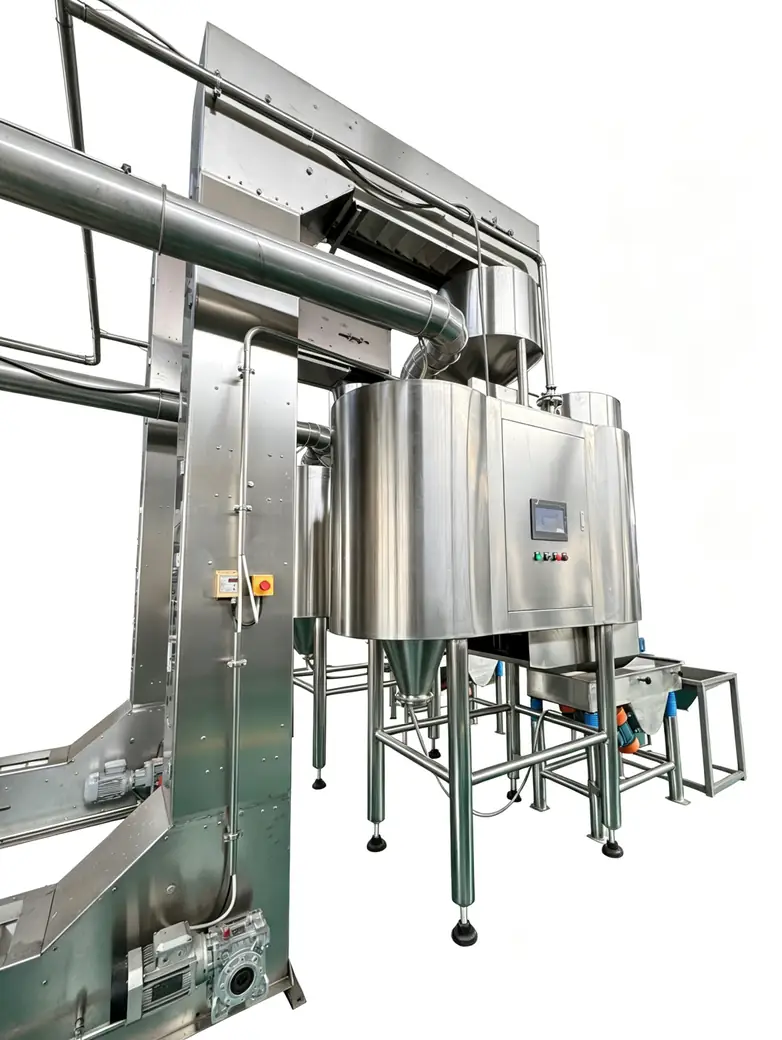
How each one works
| Dry blanching | Wet blanching | |
|---|---|---|
| Skin loosening | Low-temperature drying makes the skin brittle | Hot water or steam softens the skin |
| Removal | Rubbing between adjustable rollers, then air separation | Mechanical rubbing while wet |
| Kernel after process | Dry, storable, ready for roasting or grinding | Wet — must be dried before storage |
| Water use | None | Significant |
| Effluent | None; skin collected dry via cyclone | Wastewater requiring treatment |
| Extra machine needed | No | Yes — a dryer after blanching |
When dry blanching is the right choice
- You are feeding a roasting line, a butter mill or a bakery kernel spec
- You want the kernel to stay whole — dry rubbing with correct moisture is gentle
- You do not want a discharge permit, an effluent plant or a water bill
- You want the skin as a saleable dry by-product rather than a sludge to dispose of
When wet blanching still makes sense
- Very high skin-removal rates are required and the product tolerates rehydration
- The downstream process is wet anyway, so drying is already in the plant
- Local water and effluent costs are low and permitting is straightforward
The variable that decides dry blanching success
Kernel moisture entering the peeler — nothing else comes close. Too wet and the skin is elastic, stretching instead of cracking, and removal rate collapses. Too dry and the kernel itself becomes brittle and breakage rises.
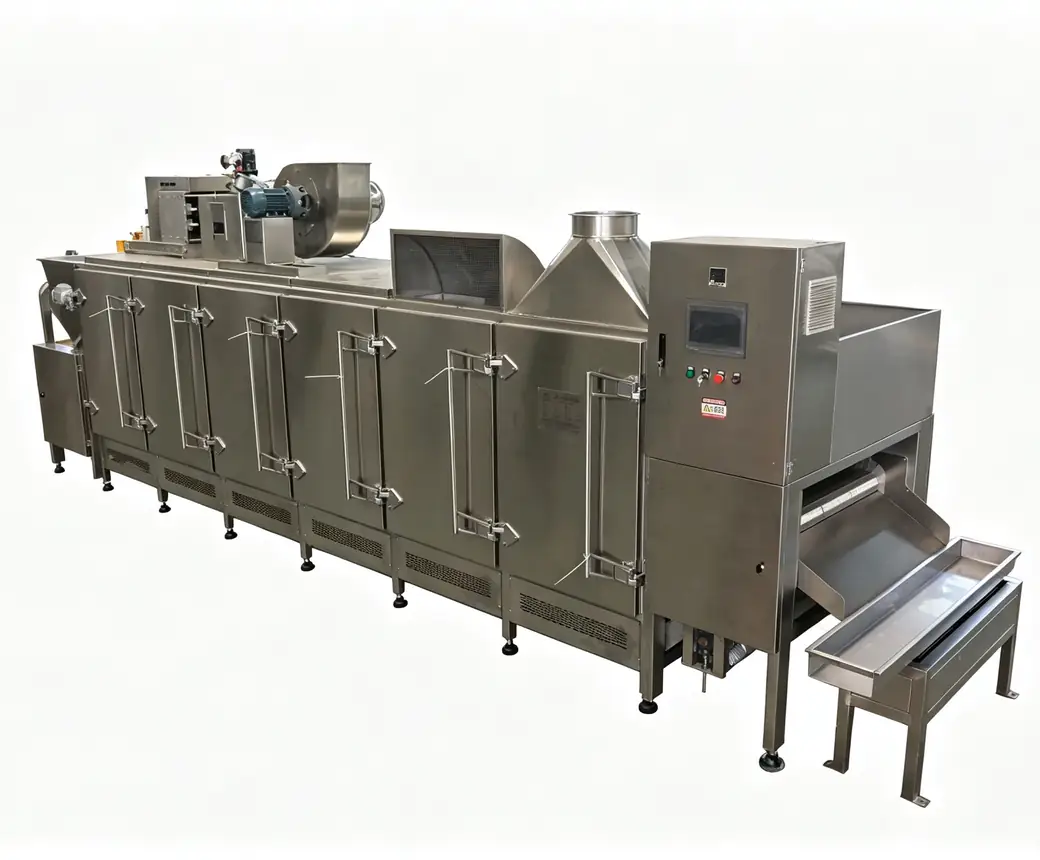
That is why a dry blanching line is really two machines working together: a drying stage that puts the kernel in the right moisture window, and a peeler that exploits it. Buying the peeler alone and feeding it whatever the previous step delivers is the most common reason people conclude that dry blanching does not work.
What our dry line consists of
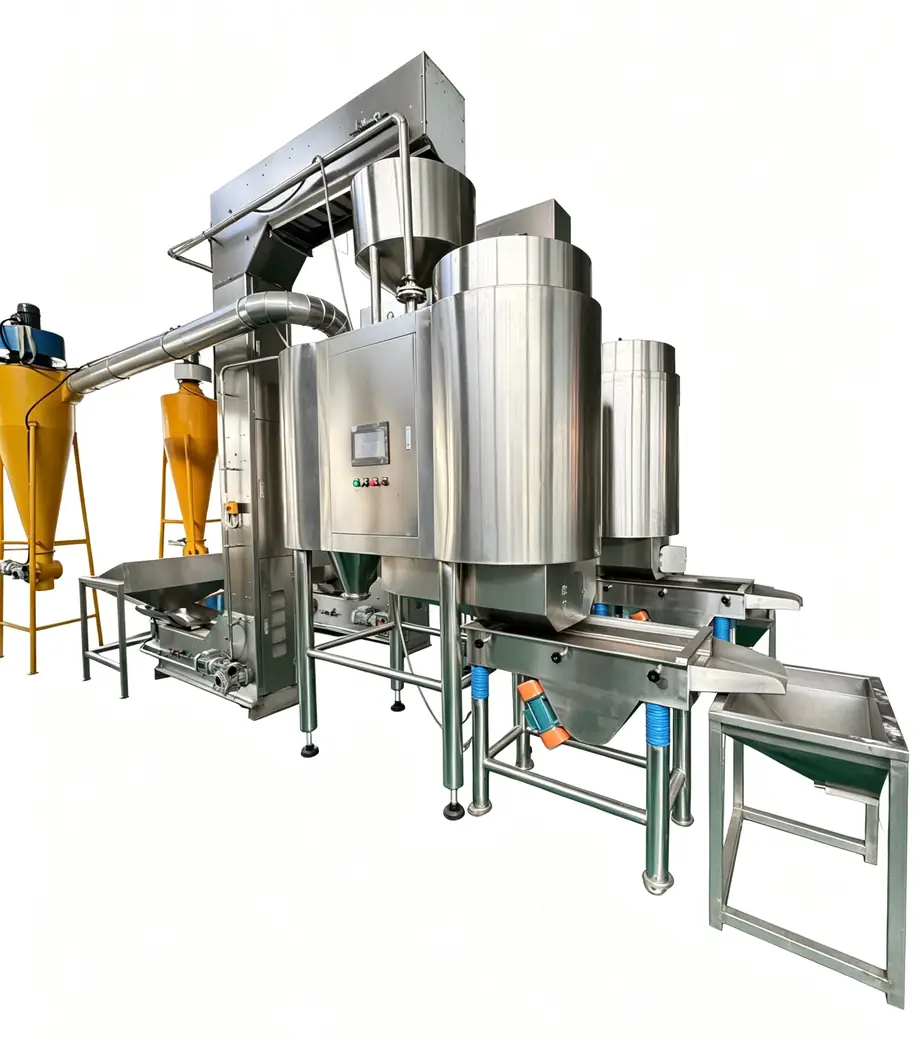
An infeed elevator, a rubbing chamber with adjustable rollers, an air separation section, a cyclone skin collector and a discharge conveyor. Exact roller configuration and airflow settings are matched to the kernel grade being processed. A splitting and grading stage can be added on the same line to produce half kernels and remove the germ.