
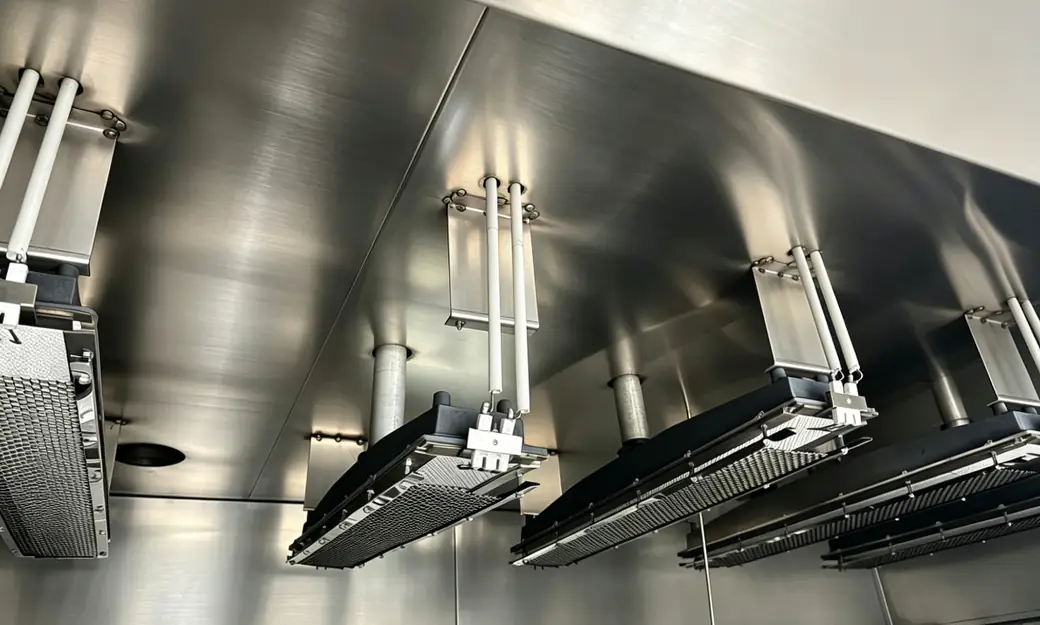
Side by side
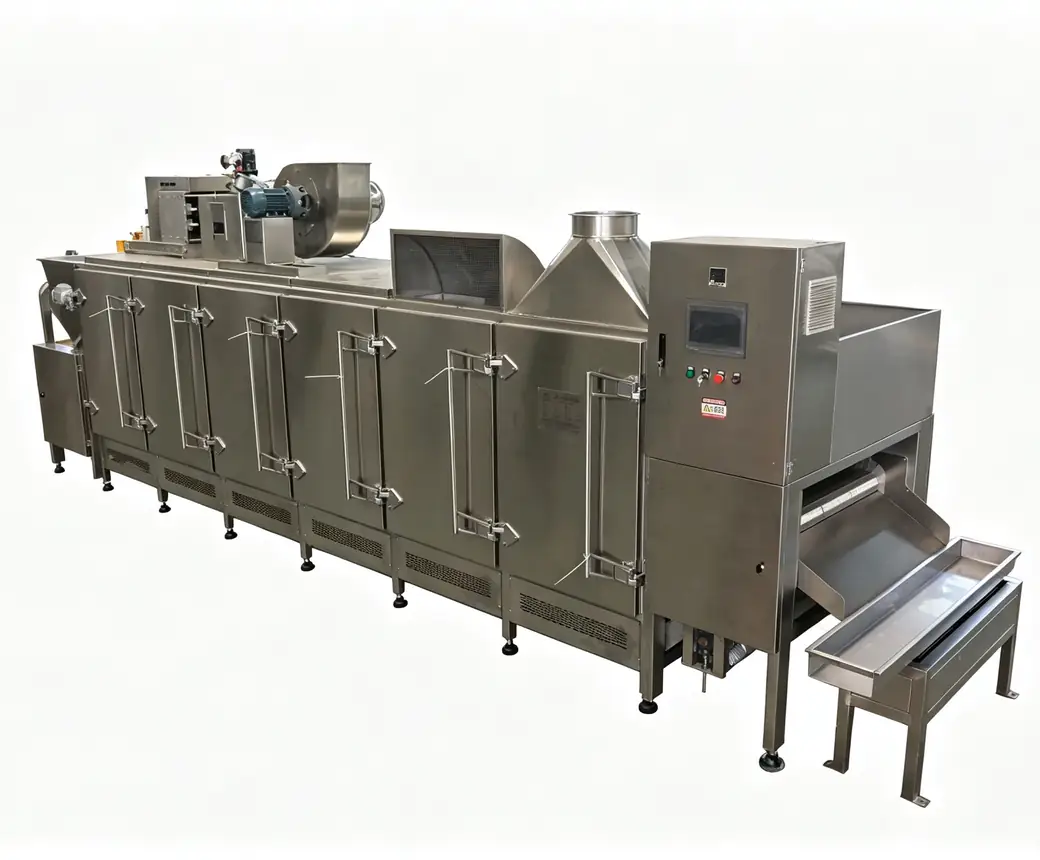
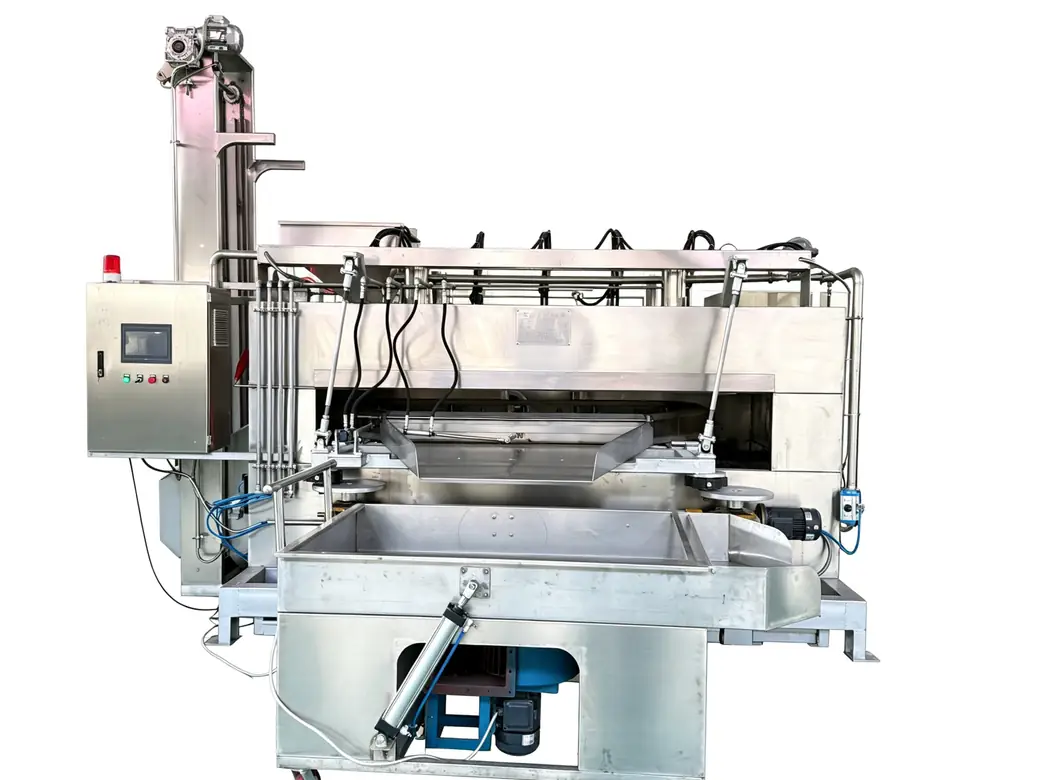
| Batch (rotary pan PDK-90) | Continuous (DGKX-C) | |
|---|---|---|
| Typical output | 30–60 kg per batch, ≈120–150 kg/h | 200–300 kg/h |
| Changeover | Minutes | Purge cycle |
| Best for | Many SKUs, small batches, recipe development | One or two high-volume products |
| Cost per kg roasted | Higher | Lower |
| Operator attention | Higher — it is a hands-on machine | Lower once the curve is set |
| Uniformity within a batch | Good — tumbling bed | Good — zoned, but depends on bed thickness |
| Uniformity between batches | Depends on the operator | Higher — the curve is fixed by the zones |
Choose batch if
- You sell more than three or four flavours
- You are still finding out what the market wants
- Your batch sizes per SKU are small and orders are frequent
- You need a machine you can also use for R&D once you scale up
Choose continuous if
- One or two products account for most of your volume
- You have contracted offtake and the line will actually run at capacity
- Consistency between batches is contractually important — private label, for instance
- Cost per kilo is the number your business is judged on
The path most of our customers actually take
Start with the rotary pan. Develop the recipes, find out what sells, build the customer base. When one or two SKUs pull ahead, add continuous roasting for those and keep the pan for new product development and small special orders.
This works because the same roast profile scales from the pan to continuous roasting without reformulating — so a pilot line gets extended rather than replaced.
Questions we get asked about this
Is continuous always more uniform?
Between batches, generally yes, because the zones fix the curve rather than the operator. Within a single batch, a tumbling pan is very even — the risk on a continuous oven is bed thickness, where the middle of a thick bed sees less airflow than the edges.
Can one continuous oven handle several products?
Yes, one at a time, with a changeover between them. The question is not whether it can, it is whether the changeover time is acceptable at your SKU count. Six flavours a day is where continuous starts to hurt.